
The Best Destinations for Religious Tourism in Spain
Religious tourism in Spain is one of the most complete ways to experience the country.
It is not just about visiting churches, cathedrals, or sanctuaries, but about understanding the role that spirituality has played in shaping its history, cultural identity, and heritage.
Over the centuries, Spain has established itself as one of the leading references in the Christian world.
This legacy is still present today through pilgrimage routes, iconic religious sites, and living traditions.
A journey that connects history, culture, and spirituality
Traveling for religious purposes is no longer driven solely by faith.
More and more people are drawn to these experiences in order to understand the cultural, artistic, and symbolic context of the places they visit.
Spain’s religious heritage offers exactly that: the opportunity to discover sites with centuries of history, interpret their meaning, and understand how they have shaped the country’s social and cultural evolution.
From grand cathedrals to monasteries set in natural landscapes, each location offers a different way to experience this type of journey.
Spain and Latin America: a living connection
For travelers coming from Latin America, religious tourism in Spain holds a particularly meaningful dimension.
It is not just about visiting iconic places, but about understanding the origins of many traditions that are still alive today in countries such as Mexico, Colombia, or Peru.
Many of the devotions, celebrations, and religious symbols that are part of everyday life in Latin America were born in Spanish cities that still preserve this legacy.
Visiting these places allows travelers to understand that connection and experience it in a more conscious and personal way.
More than visiting places: a different way of traveling
Interest in this type of travel has evolved in recent years. Today, travelers are not just looking to see the most famous landmarks, but to engage in experiences that carry meaning.
This means moving away from superficial itineraries and choosing experiences that provide context, historical understanding, and a deeper appreciation of each place.
In this context, religious tourism in Spain offers a wide range of possibilities.
From internationally renowned destinations to less crowded areas where the experience can feel more authentic, more relaxed, and more personal.
In the following sections, you will discover these destinations and why some of them—especially regions like Aragón—are becoming particularly attractive alternatives for those seeking a more meaningful way to travel.
What is religious tourism and why Spain is one of the most important destinations in the world
Religious tourism in Spain goes far beyond visiting places of worship.
It is a way of traveling that brings together spirituality, heritage, history, art, and culture, allowing visitors to connect with spaces that have played a key role in shaping the identity of many cities and regions.
This type of travel can respond to very different motivations.
For some, it is a journey rooted in faith and devotion; for others, it is a way to better understand Europe’s religious history and its influence on the Spanish-speaking world.
Many travelers are also drawn by an interest in architecture, sacred art, and traditions that remain alive today.
This is precisely where its strength lies: religious heritage is not limited to spirituality, but offers a way to understand how a significant part of Spanish culture has been shaped over the centuries.
⛪ One of Aragón’s most meaningful spiritual sites: If you want to experience religious heritage with real depth, history, and atmosphere, take a look at this Monastery of San Juan de la Peña and Santa Cruz de la Serós tour ✨. A perfect way to explore one of the most soulful corners of religious tourism in Aragón.
A way of traveling beyond religion
Although traditionally linked to pilgrimage and faith, faith-based tourism today also attracts travelers seeking deeper cultural experiences.
It is not necessary to approach these places from a religious perspective to appreciate their value; curiosity and a desire to understand their meaning and context are enough.
A cathedral, monastery, or basilica is not just a monumental building.
It represents a period in history, a community, and a way of understanding the world. When visited with this perspective, the journey gains depth and meaning.
Spain as a historical reference in the Christian world
Spain holds a particularly important position within this type of travel.
For centuries, it has been one of the key territories of Christianity in Western Europe, and that legacy remains visible throughout the country.
From internationally recognized pilgrimage routes to cities shaped by strong religious traditions, Spain offers an exceptional concentration of significant religious sites.
This importance is not only reflected in the number of places to visit, but also in the diversity of experiences they offer.
Some destinations are associated with contemplation, others with popular religious traditions, others stand out for their artistic value, and some allow visitors to understand the relationship between faith, power, society, and territory.
For this reason, religious tourism in Spain is not a single type of journey, but a broad and diverse network of places that offer different ways of experiencing spirituality.
Heritage, tradition, and everyday life
One of the aspects that makes Spain particularly interesting is that its religious heritage is not disconnected from daily life.
In many cities and towns, churches, hermitages, monasteries, and religious celebrations remain part of everyday routines, local identity, and cultural traditions.
This continuity enriches the travel experience.
Visitors are not only exploring historical buildings, but spaces that still hold meaning, use, and a strong connection with the local community.
A cultural and spiritual connection with Latin America
For Latin American travelers, religious tourism in Spain also carries a strong cultural significance.
Many of the traditions, devotions, and religious symbols present across Latin America today have their roots in Spanish cities and regions.
Traveling through these places allows visitors to better understand this shared heritage and reconnect with a cultural identity that continues to exist on both sides of the Atlantic.
An evolving way of traveling
In recent years, the way people approach these destinations has changed. Today’s traveler increasingly values experiences that provide context, depth, and interpretation.
It is no longer just about visiting famous landmarks, but about understanding why they matter and what makes them unique.
This shift has encouraged a more meaningful way of engaging with heritage and has brought attention to destinations that, while less internationally known, offer a more personal, quieter, and more connected experience.
Within this context, Spain remains one of the most complete destinations for those seeking to combine culture, history, and spirituality in a single journey.
The main destinations for religious tourism in Spain you should know
Spain is home to some of the most important religious sites in Europe, both for their spiritual significance and their historical and cultural value.
Across the country, visitors can follow pilgrimage routes, visit monumental cathedrals, and discover monasteries that have shaped the cultural development of their regions.
This diversity allows travelers to understand religious tourism in Spain from different perspectives: as a spiritual experience, a cultural journey, or a way to explore the country’s history through its religious heritage.
Many of these places stand out not only for their architecture or age, but for having served for centuries as centers of power, cultural transmission, and social organization.
They reflect the evolution of Spain from the Middle Ages to the present day.
Santiago de Compostela and the Camino de Santiago
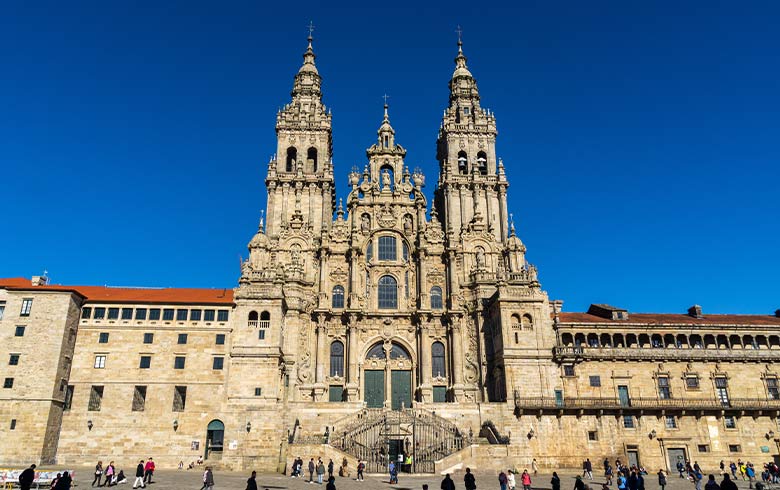
The Camino de Santiago is one of the most important references in faith-based tourism worldwide and one of the most significant pilgrimage routes in Christianity since the Middle Ages.
Its origins date back to the 9th century, with the discovery of the supposed tomb of the Apostle James in Galicia.
For centuries, this route connected the movement of people, ideas, and culture across Europe.
It was not only a spiritual path, but also a key axis of economic and social exchange that contributed to the formation of a shared European identity.
Along its different routes—such as the French Way, the Northern Way, or the Vía de la Plata—travelers cross diverse landscapes that reflect Spain’s cultural richness.
Each stage offers a unique experience shaped by the scenery, architecture, and history of each region.
Beyond the final destination, the true value of the Camino lies in the journey itself. The pace, the interaction with other pilgrims, and the continuous connection with the surroundings make it a truly unique experience.
Zaragoza: history, faith, and one of the great symbols of the Hispanic world
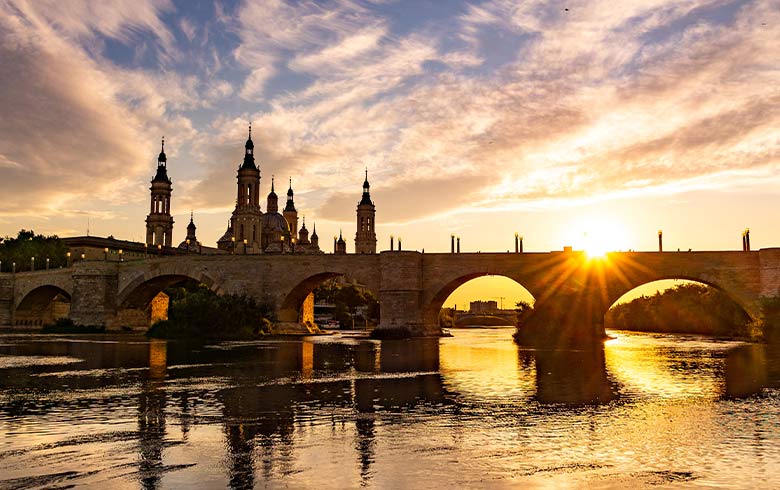
Zaragoza holds a prominent place within religious tourism in Spain, especially due to its importance in the Catholic Hispanic world and its strong symbolic connection with Latin America.
The Basilica of Our Lady of the Pillar is one of the most important Marian temples in the Hispanic world.
According to tradition, this is the site where the Virgin Mary appeared to the Apostle James, making Zaragoza one of the earliest centers of Marian devotion in Christianity.
This deeply rooted tradition has made El Pilar a shared symbol between Spain and Latin America, where the Virgin of the Pillar is also widely venerated.
Alongside it, the Cathedral of the Savior, known as La Seo, reflects the historical evolution of the city through its different architectural styles, including Aragonese Mudéjar, recognized as a UNESCO World Heritage Site.
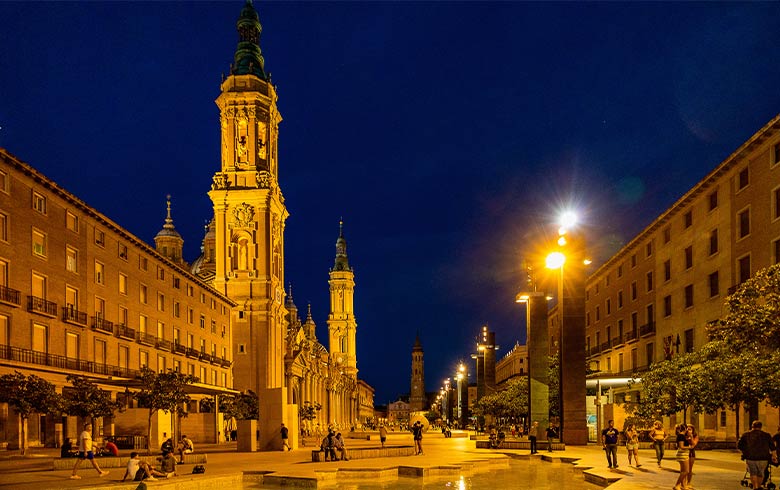
Both temples are located in Plaza del Pilar, one of the largest pedestrian squares in Europe, forming a unique monumental space that concentrates much of Zaragoza’s historical and religious identity.
This setting helps explain how Zaragoza has, for centuries, been a strategic enclave in the Ebro Valley, serving as a key connection point between different commercial, cultural, and religious routes.
Montserrat: spirituality and landscape
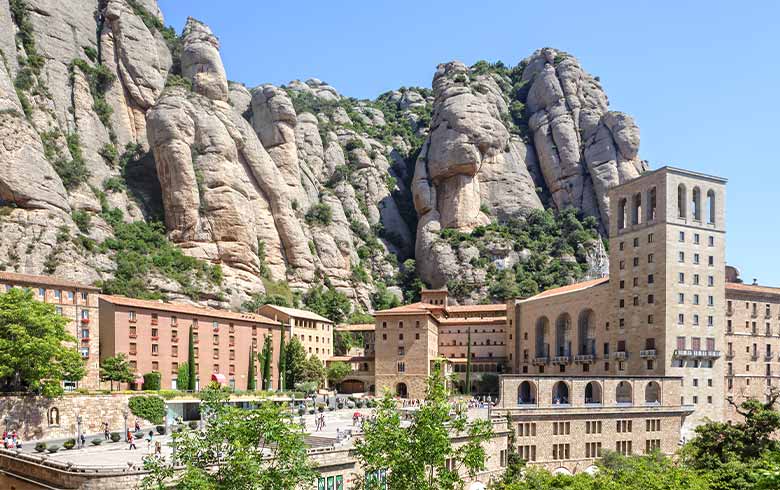
The Monastery of Montserrat, located in Catalonia, has been one of the country’s main pilgrimage centers since the Middle Ages.
It houses the image of the Virgin of Montserrat, known as “La Moreneta,” one of Spain’s most important Marian devotions.
Its uniqueness lies in the combination of spirituality and natural surroundings.
The rock formations surrounding the monastery create a distinctive landscape that has historically reinforced its character as a place of retreat and contemplation.
This balance between nature, symbolism, and tradition makes it a particularly compelling destination within spiritual tourism in Spain.
Toledo: religion, history, and cultural coexistence
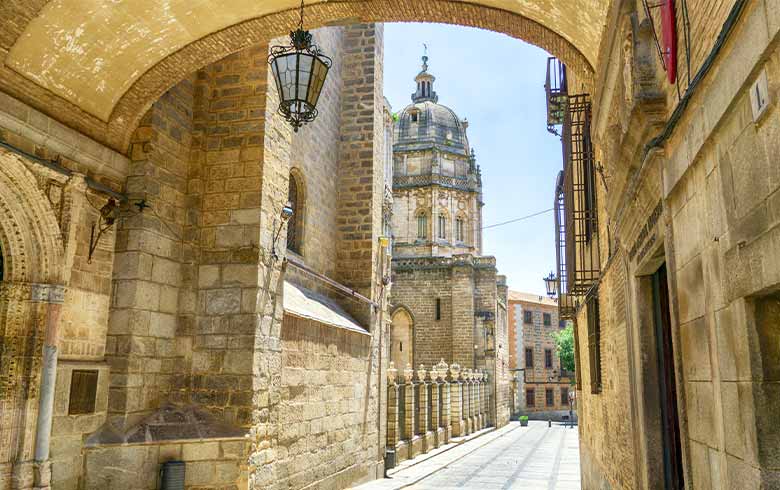
Toledo is one of the clearest examples of how religion has shaped Spain’s history.
During the Middle Ages, it was a major political and religious center and a place where Christians, Jews, and Muslims coexisted.
Its Primate Cathedral is one of the most important in the country, but the true value of Toledo lies in its urban fabric, where churches, synagogues, and former religious spaces reveal the city’s historical complexity.
This context makes Toledo a key destination for understanding the relationship between religion, power, and society.
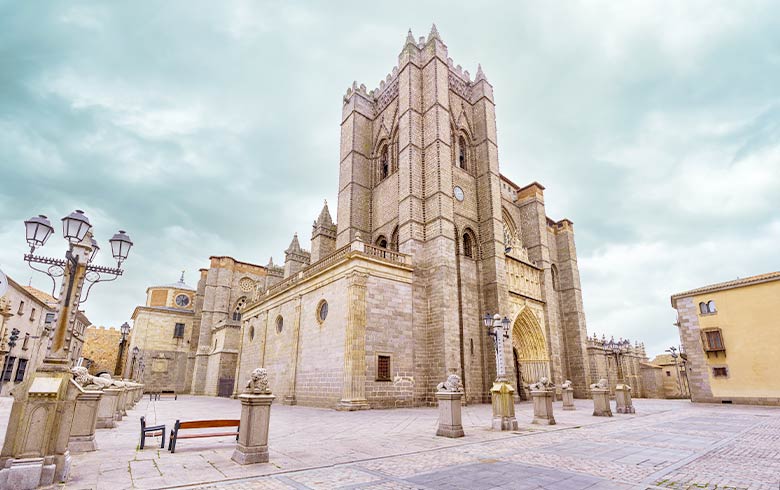
Ávila: spirituality and introspection
Ávila is deeply connected to the figure of Saint Teresa of Jesus, one of the most important mystics of the 16th century.
Her legacy has shaped the identity of the city, which preserves many sites related to her life.
The walled setting, along with the presence of convents and churches, creates an atmosphere that invites a more introspective, slower, and spiritually focused experience.
Seville and Holy Week: the most expressive form of devotion
In Seville, religiosity is expressed in an especially intense way during Holy Week, one of the most important religious celebrations in Spain.
The processions, organized by brotherhoods with centuries of history, transform the city into a collective experience that blends tradition, emotion, and popular culture.
This type of expression adds a different dimension to religious tourism in Spain, where faith is lived publicly and shared by the community.
Other destinations that complete the religious landscape
Beyond these major landmarks, cities such as Burgos, León, or Salamanca, along with numerous monasteries across the country, complete a broad and diverse religious map.
This network of destinations shows that religious tourism in Spain is not concentrated in isolated locations, but forms part of an extensive cultural fabric that has shaped the country for centuries.
- Historical importance within European Christianity
- Outstanding architectural and artistic heritage
- Diverse experiences: pilgrimage, contemplation, and popular traditions
- Strong connection between religion, culture, and territory
🏛️ A quieter way to discover religious heritage: For travelers who prefer less crowded destinations with character, this trip to Veruela Abbey and Campo de Borja offers a beautiful blend of monastic history, landscape, and local identity 🌿. Ideal for a more reflective and authentic journey through Aragón.
Less crowded destinations: another way to experience religious tourism in Spain
The major landmarks of religious tourism in Spain are part of well-established itineraries that attract thousands of visitors every year.
Places such as Santiago de Compostela, Montserrat, or Seville enjoy international recognition, making them common stops on most travel routes.
However, this popularity also affects the overall experience.
High visitor numbers, limited time, and tightly structured itineraries can make it difficult to connect with these places in a more relaxed and meaningful way.
This does not diminish their value, but it does highlight an increasingly important distinction for today’s traveler: the difference between seeing a place and truly understanding it.
Beyond the main tourist circuits
Spain offers a much broader network of religious heritage that does not always appear in the most popular itineraries.
Monasteries, churches, hermitages, and small historic sites spread across the country provide a different perspective on this type of travel.
In these settings, visitors can engage with heritage without the pressure of fast-paced tourism, allowing for a more balanced and mindful experience.
- Fewer crowds
- Greater opportunity for observation and understanding
- Closer connection with the local environment
- More flexible and less restrictive itineraries
A shift in the way we travel
The profile of today’s traveler has evolved. Instead of prioritizing the number of places visited, there is a growing focus on the quality of time spent in each location.
In the case of faith-based tourism, this shift is especially relevant.
Understanding the meaning of a place—its historical function and symbolic value—requires time and context, something that is difficult to achieve through rushed visits.
As a result, many travelers now choose more focused itineraries, where each stop contributes to a coherent and meaningful journey.
Regions that offer a different way of traveling
This approach highlights regions that, while not always at the center of mainstream tourism, preserve a rich and valuable religious heritage.
These are places where the experience is not shaped by overcrowding, and where it is possible to explore at a slower, more natural pace.
In these territories, travel becomes more complete.
Visitors do not simply see monuments—they understand their connection to the landscape, to local history, and to everyday life.
Within this context, Aragón stands out as one of the clearest examples of this way of experiencing religious tourism in Spain.
Its heritage, scale, and rhythm make it an especially appealing option for those seeking a more authentic experience.
A deeper and more meaningful experience
Choosing less crowded destinations does not mean sacrificing quality—quite the opposite. It allows access to places of great historical and cultural value under conditions that favor understanding and connection.
This type of travel reflects a more thoughtful approach, where the goal is not to accumulate visits, but to build a journey that is coherent, meaningful, and truly enriching.
🌿 A monastery experience with a more contemplative feel: If you are drawn to places where heritage, silence, and nature come together, this full-day tour to the Piedra Monastery from Zaragoza is well worth considering ✨. It adds a slower, more atmospheric dimension to a religious and cultural itinerary in Spain.
How to experience religious tourism in Spain with a deeper perspective
Visiting places of great historical and spiritual value does not always result in a meaningful experience.
In many cases, the visit remains on the surface: travelers see the spaces, but do not fully understand what they represent.
In religious tourism in Spain, this distinction is essential.
Every temple, monastery, or sanctuary is rooted in a specific context, shaped by history and by its role within society—something that is not always immediately visible.
When the experience stays on the surface
Many visits follow fixed itineraries, with limited time and general explanations.
This approach allows travelers to cover several locations quickly, but it often limits their ability to truly understand what they are seeing.
The result is often a fragmented experience, where places are visited one after another without a clear connection between them.
- Sites are visited without understanding their historical context
- The symbolic meaning of many elements is overlooked
- There is not enough time to observe details
- The experience becomes similar to any other type of tourism
Understanding as the key to appreciation
When a more interpretive approach is introduced, the entire experience changes.
These places are no longer seen simply as monuments, but as living testimonies of a time, a tradition, and a way of understanding spirituality.
Understanding why a temple was built in a specific location, what its symbols represent, or how its function has evolved over time adds a completely new dimension to the visit.
In this sense, faith-based tourism allows travelers to go beyond what is visible and access a deeper reading of heritage.
The importance of pace
Not all places are meant to be experienced in the same way. Some require time, silence, and a certain sense of pause in order to be fully appreciated.
Reducing the number of visits and dedicating more attention to each space makes it possible to notice details that would otherwise go unnoticed.
It also allows for a more natural connection with the environment and the history of each place.
A more human and connected experience
When travel is approached in this way, the relationship with the destination changes.
There is a greater interest in local context, in stories that are not always found in guidebooks, and in the subtle details that give meaning to each place.
This perspective fits particularly well in regions where religious heritage is part of everyday life, rather than just a tourist attraction.
This is where more carefully designed and personalized experiences allow travelers to access a different way of experiencing religious tourism in Spain—with greater depth, coherence, and meaning.
Discover Zaragoza and Aragón through a more thoughtful and locally connected experience
Within the landscape of religious tourism in Spain, Zaragoza and Aragón hold a distinctive position.
They do not stand out for mass tourism or high visitor numbers, but for the quality of the experience, the authenticity of the environment, and the opportunity to visit these places with greater calm and understanding.
Unlike other destinations where the pace is shaped by tourism flows, here travelers encounter a different rhythm—slower, more accessible, and more closely connected to the reality of the region.
Zaragoza: one of the great spiritual centers of the Hispanic world
Zaragoza has historically been one of the most important religious enclaves in Spain.
Its significance goes beyond its heritage, extending into its symbolic role within the Catholic imagination, especially in the Spanish-speaking world.
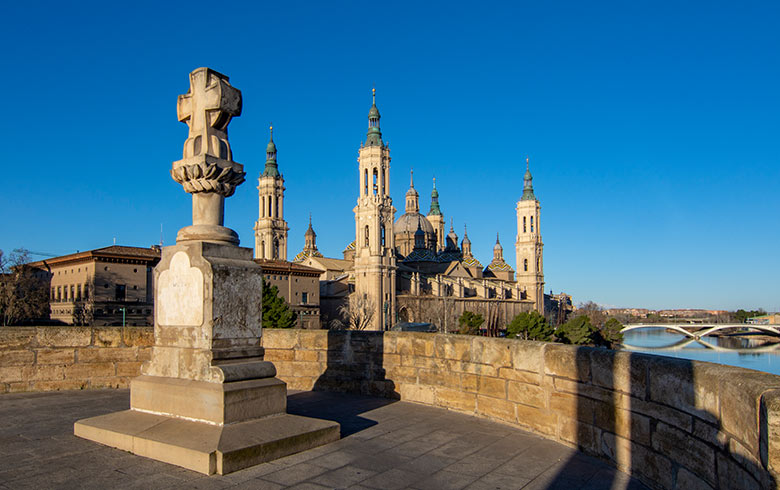
The Basilica of Our Lady of the Pillar, located on the banks of the Ebro River, is one of the most important Marian temples in the world.
According to tradition, this is where the Virgin Mary appeared to the Apostle James, making Zaragoza one of the earliest centers of Marian devotion in Christianity.
This history has given rise to a devotion that extends far beyond Spain, particularly in Latin America, where the Virgin of the Pillar remains a deeply respected figure.
Alongside it, the Cathedral of the Savior (La Seo) completes an exceptional monumental complex.
🏙️ See Zaragoza with more context and local flavor: If you are interested in understanding the city beyond its most famous landmarks, this monumental walking tour and tapas tour in Zaragoza is a great complement 🍷. It pairs beautifully with visits to El Pilar and La Seo while adding a more human and cultural perspective.
This building reflects the historical evolution of the city through styles such as Romanesque, Gothic, Renaissance, and Aragonese Mudéjar—the latter recognized as a UNESCO World Heritage Site.
Both buildings are integrated within Plaza del Pilar, one of the largest pedestrian squares in Europe, forming an open space that allows visitors to understand Zaragoza’s historical, cultural, and religious dimension in a single setting.
This ensemble stands out not only for its architectural value, but also for its historical role as a key point in the Ebro Valley—an area that for centuries has served as a crossroads for different commercial, cultural, and religious routes.
Aragón: heritage, territory, and authenticity
Beyond Zaragoza, Aragón offers a wide range of religious sites that allow travelers to expand their experience and understand faith-based tourism from a more territorial perspective.
Monasteries, churches, and small historic towns across the region preserve a heritage that, in many cases, has remained outside the major tourist circuits.
This allows visitors to experience them under very different conditions compared to more crowded destinations.
The value of Aragón lies not only in its monuments, but in the relationship they maintain with the landscape, local history, and the everyday life of its people.
- Religious sites integrated into natural landscapes
- Well-preserved heritage with less saturation
- Routes that help understand historical context
- A slower, more accessible travel experience
A region that invites a different way of traveling
Traveling through Aragón means rethinking the way we approach a destination.
It is not about accumulating visits, but about building a journey with meaning, where each place is understood within a broader context.
This approach is especially appealing to those seeking a more complete experience within religious tourism in Spain, where heritage is not seen as isolated landmarks, but as part of a living territory and its history.
For this reason, Zaragoza and Aragón are not just an alternative to more well-known destinations, but a proposal capable of offering a more coherent, more personal, and often more enriching experience.
Frequently asked questions about religious tourism in Spain
What are the most important religious tourism destinations in Spain?
The main destinations include Santiago de Compostela and the Camino de Santiago, the Basilica of the Pillar in Zaragoza, Montserrat in Catalonia, the city of Toledo, Ávila, and Seville during Holy Week.
Each offers a different experience, from pilgrimage routes to historical heritage and religious celebrations.
Do you need to be religious to experience religious tourism?
No. Religious tourism in Spain also attracts travelers interested in history, architecture, and culture. Many visitors seek to understand the meaning of these places beyond faith.
When is the best time to travel for religious tourism in Spain?
It depends on the type of experience you are looking for. Spring is particularly interesting due to celebrations such as Holy Week. However, throughout the rest of the year, it is possible to visit churches, cathedrals, and routes with fewer crowds and a more relaxed pace.
How many days are needed for a religious tourism route in Spain?
This depends on the itinerary, but it is recommended to plan multi-day trips that allow you to visit key destinations without rushing. In regions like Aragón, more compact routes can combine heritage, culture, and gastronomy in a shorter time.
What is the difference between a standard visit and a more complete experience?
The difference lies in context. A standard visit focuses on seeing the places, while a more complete experience helps you understand their history, symbolism, and connection to the surrounding environment.
Is it recommended to take a guided experience?
Having a guide or a well-designed experience helps you better understand the places you visit. It provides context, interpretation, and a deeper perspective that significantly enhances the experience.
Why is Zaragoza a key destination for religious tourism?
Zaragoza is home to the Basilica of the Pillar, one of the most important temples in the Hispanic world, as well as the Cathedral of the Savior (La Seo). Its scale and accessibility allow visitors to experience these sites in a more relaxed way compared to more crowded destinations.
What does Aragón offer compared to more well-known destinations?
Aragón offers a slower, less crowded experience, with well-presederved heritage and a strong connection to the territory. This allows visitors to experience faith-based tourism in a more authentic and personal way.
Can religious tourism be combined with gastronomy in Spain?
Yes. In many regions, especially in Aragón, religious heritage is closely linked to local culture, including gastronomy. Combining both aspects creates a more complete and meaningful travel experience.
Is it possible to have a more personalized religious tourism experience?
Yes. There are experiences designed to adapt to each traveler’s pace and interests, incorporating historical context, interpretation, and a closer connection to the local environment. This approach offers a deeper and more meaningful way to understand the places visited.
A different way to understand religious tourism in Spain
Religious tourism in Spain goes far beyond visiting temples or historical landmarks.
It is a way of approaching the country by understanding how spirituality, culture, and history have shaped its cities and regions.
Throughout this journey, we have seen that there are internationally recognized destinations, but also places where the experience is quieter, more contextualized, and more closely connected to the local environment.
In this sense, Zaragoza and Aragón stand out as particularly compelling options.
Not only because of the importance of landmarks such as the Basilica of the Pillar or the Cathedral of the Savior, but also because of the opportunity to experience them with time, coherence, and within a region that preserves a strong cultural identity.
Today, travel is no longer just about seeing places, but about giving them meaning within a broader journey.
And that is where the way the experience is designed truly makes a difference.
If you are looking for a more thoughtful and curated way to approach this type of travel, you can discover the proposals of Rutica41, where heritage, history, and gastronomy come together through experiences designed from local knowledge.
Because some destinations are simply visited… and others are truly understood.