Private Tour vs. Group Tour: Differences and How to Choose
You are about to book a food tour or a winery visit, you look at the price per person, and a very common doubt stops you right before paying: am I going to share a table and tastings with strangers?
When looking into the difference between a private tour and a group tour, almost every traveler asks the same two questions: “Is this an exclusive tour just for us?” and “How many people will join in total?”.
The common mistake is thinking there are only two extremes: paying for a solo guide or ending up on a massive thirty-person excursion following an umbrella.
In reality, three very distinct formats coexist today: the private tour, the conventional shared tour, and small group guided tours—an intermediate alternative that combines the closeness and authenticity of an exclusive format without taking on its full cost.
The difference between a private tour and a group tour lies in exclusivity and group size. A private tour is booked solely for you and your companions with total flexibility.
A conventional group tour brings together 20 to 50 strangers on a fixed itinerary, whereas a small group tour limits capacity (4 to 8 spots) to offer personalized attention at a shared price.
What Is the Difference Between a Private Tour and a Group Tour?
In practical and contractual terms, the difference between a private tour and a group tour comes down to how spots are managed.
When you book a private tour, you reserve the departure exclusively for you and your companions: the group is closed. On the other hand, in a group or open format, spots are sold separately, and a single departure can bring together travelers from different independent bookings.
However, when analyzing a private tour vs. shared tour, it helps to clear up a frequent misunderstanding: just because an activity is shared does not necessarily mean you will find yourself in a huge crowd.
🧭 Looking for a trip designed around you? If you want to go beyond a single tour and plan several days around your interests, discover how we create a private travel itinerary in Spain.
In today’s travel industry, exclusivity, group size, and the level of customization are three independent variables that do not always go hand in hand.
That is why, before deciding, it is essential to look at the actual service included in each experience—such as the maximum group size allowed, tastings, transportation, or the guide’s dedication—rather than comparing only the final rate.
Shared or Conventional Tour: How It Works
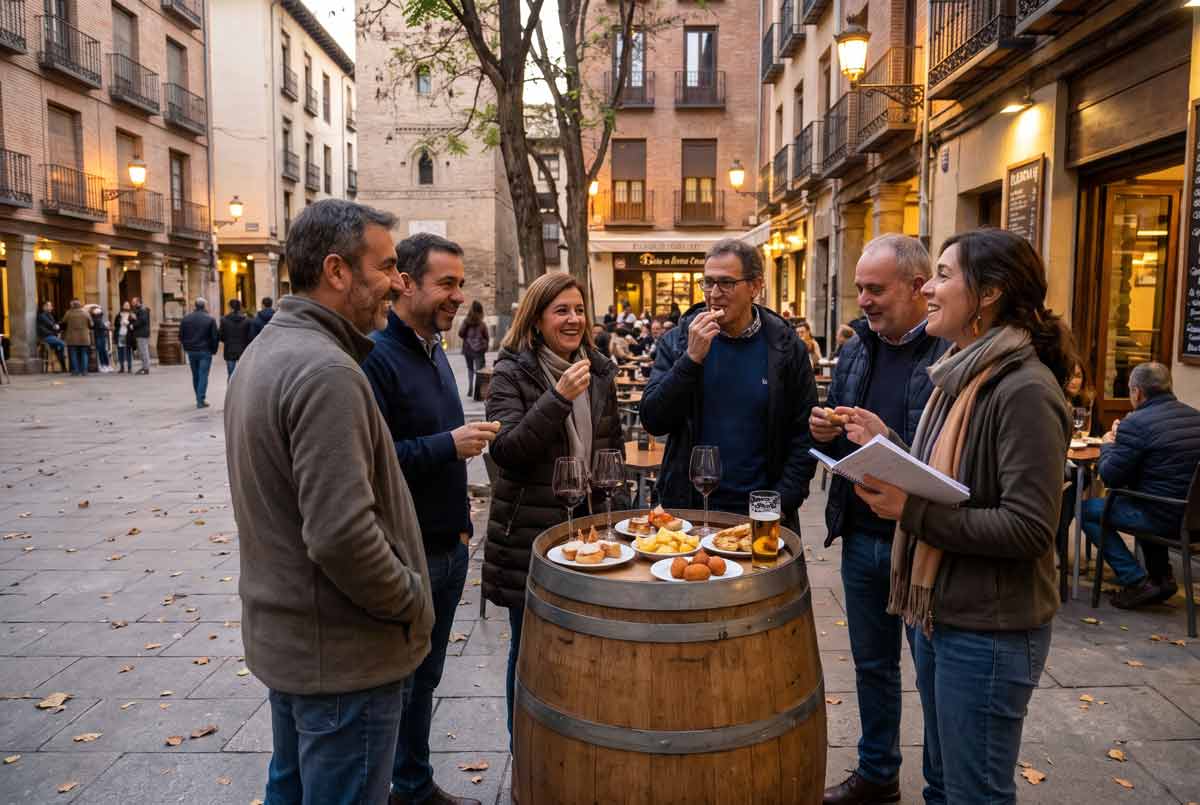
A shared tour works by combining individual bookings (solo travelers, couples, or small groups of friends) until the planned capacity for that date is reached.
To keep operations viable and punctual for all attendees, the start time, itinerary, stops, and duration are established in advance.
Within this category of group excursions, there are very different formats depending on the participant limit. Joining a standard 30-spot city walk is not the same as participating in a shared departure limited to 6 or 8 guests.
Although both models bring together travelers from separate bookings under a pre-organized route, the walking pace, closeness to the guide, and overall dynamic of the visit change completely depending on the maximum capacity set by the organizer.
Private Tour: An Exclusive Experience for Your Group
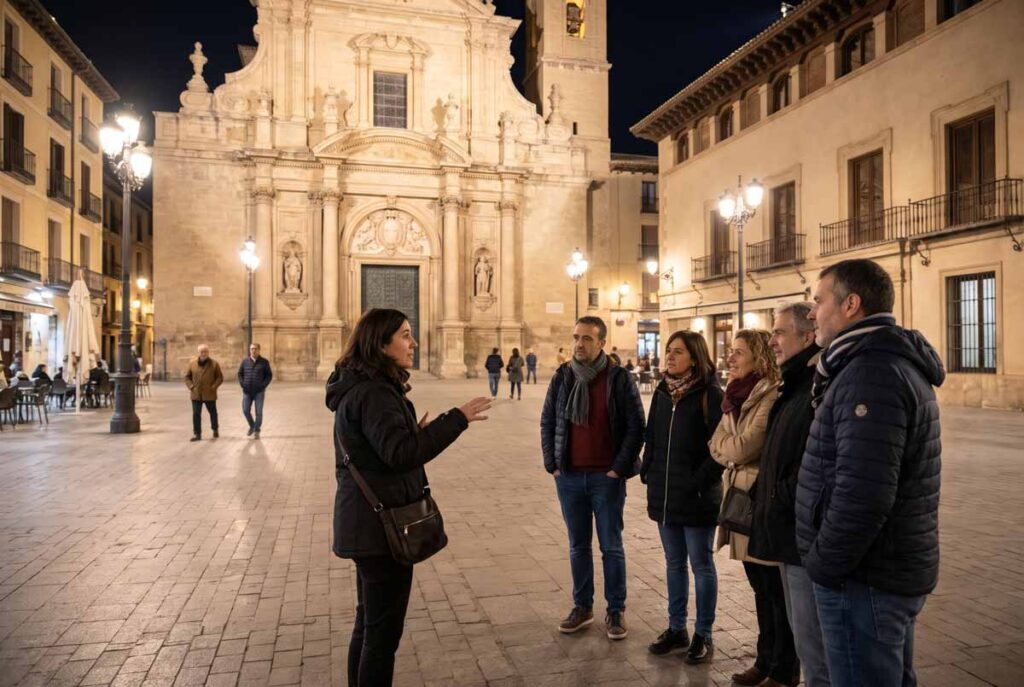
On a private tour, the main premise is privacy: no outside participants are added to your booking. Whether you are two people, a family, or a group of friends, the guide and the activity’s resources are dedicated solely to you, providing greater room to adapt the walking pace, breaks, or explanations according to the conditions of the contracted service.
That said, it is worth distinguishing between a private tour and a fully customized or tailor-made tour.
A visit can be 100% private for your group while following a pre-designed route—with stops and reservations booked in advance at restaurants or monuments—or it can be built from scratch to prioritize your specific interests.
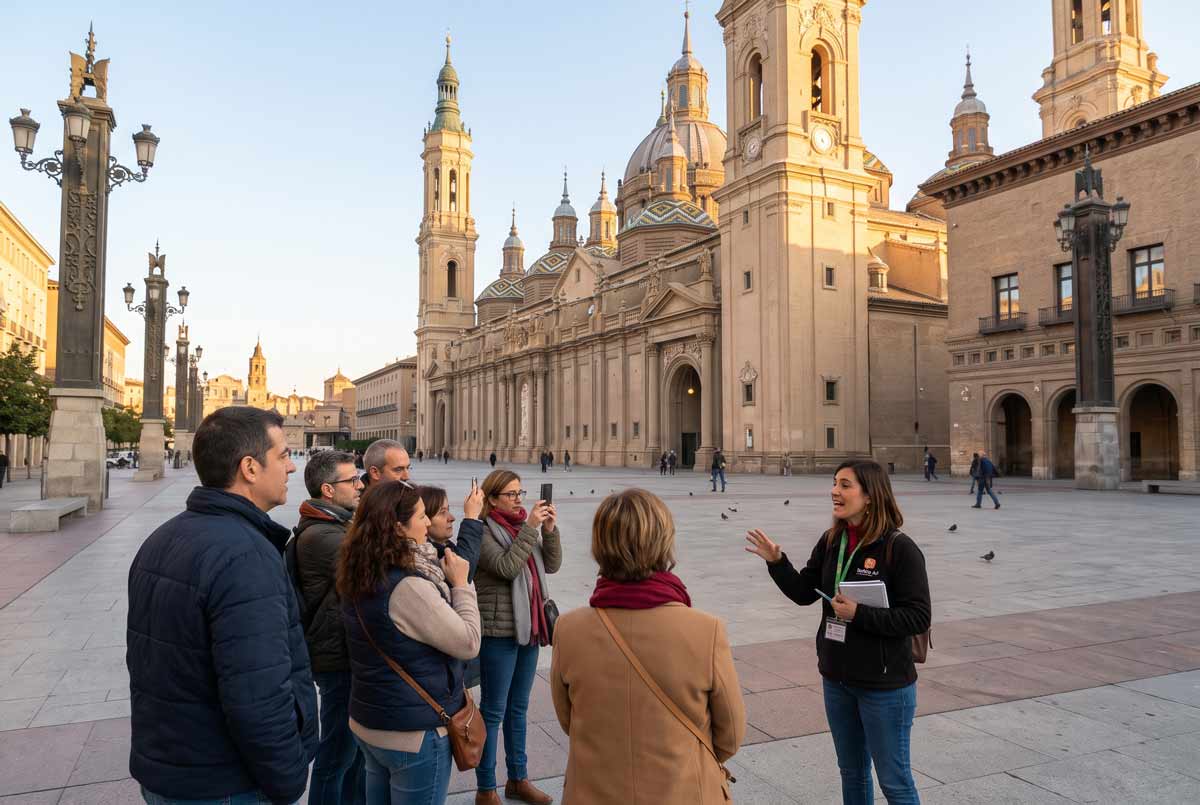
This is the case, for example, when requesting a private itinerary through Zaragoza with Rutica 41 that combines historical heritage, traditional tapas, and wine tasting, adjusting the route according to the customization options agreed upon when booking.
What Is a Small Group Tour or Boutique Tour?
To understand what a small group tour is, you have to place it at the exact intersection where the viability of a shared departure meets a careful attention to detail.
These are small group guided tours in which different travelers share an itinerary, but under a strict limit on spots that allows you to chat with the guide without raising your voice, move around agilely, and access spaces where a massive crowd would disrupt the atmosphere.
Often, this format brings up the question of what boutique tours really are. It helps to clarify that there is no universal number or official seal that automatically turns an activity into “boutique,” nor does it imply private exclusivity.
The term describes a working philosophy: designing small-scale routes where human connection, a handcrafted selection of stops, and respect for the natural rhythm of the places visited come first.
How Many People Join a Small Group Tour?
The maximum number of guests on a small group tour is not a fixed rule across the entire industry; it varies depending on the nature of the activity, the operator’s criteria, and, above all, the physical dimensions of the spaces included in the route.
An outdoor architectural walk does not allow the same capacity as the tasting room of a small family winery or the bar counter of a historic tavern.
For example, looking at specific references within the Rutica 41 catalog, the fact sheet for its food experience through the Central Market of Zaragoza (Mercado Central) sets specific brackets for groups of 5 to 10 people—a range designed to walk among the stalls without blocking the aisles. However, each route has its own logistical particularities.
Furthermore, it is important to distinguish between the maximum group capacity (the cap on spots the organizer allows to be opened for a date) and the spots actually filled on that departure.
Therefore, before booking any shared experience, the most practical recommendation is to always check the activity details for the maximum capacity established for that specific tour.
What Defines a Boutique Experience?
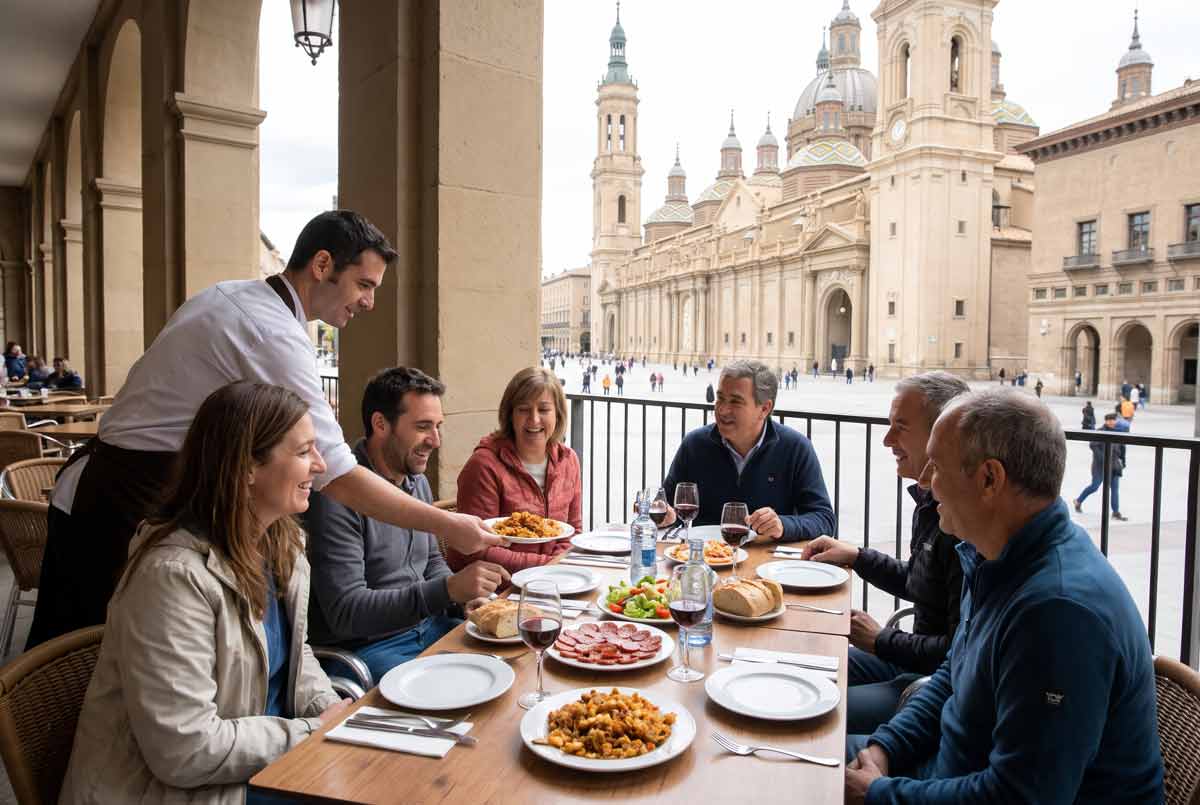
Beyond the number of participants, what defines boutique tours is felt in the specific moments along the route.
The difference does not lie in promising one-on-one solo attention—since it is still a shared group—but in how the reduced scale transforms your relationship with the surroundings:
- Selection of venues and producers with identity: Priority is given to local businesses, artisan workshops, olive oil mills, or wineries where a family or craftsperson is still behind the counter, steering clear of stops geared toward coach tourism.
- Real conversation with guides and hosts: The size of the group allows you not only to listen to the guide, but also to ask questions and talk face-to-face with the person who makes the product.
- Tastings with context: It is not just about tasting a wine, an olive oil, or a tapa, but understanding why that ingredient tastes the way it does in that territory, who grows it, and how it is prepared.
- Smooth and adapted logistics: From transportation to table reservations, timings are calculated to avoid unnecessary waiting and maintain the group’s comfort during every transfer.
🍷 What makes a food tour truly local? Discover how food, markets, local producers and regional culture come together in our guide to gastronomic tourism in Zaragoza.
A very clear example of this dynamic comes to life on the Rutica 41 routes connecting Zaragoza’s Central Market with the surrounding streets: by going in a small group, it is possible to stop in front of a historic stall, chat for a few minutes with the vendors about the seasonal produce that just arrived that morning, and right after, continue the route through nearby culinary spots to taste those very same fresh ingredients cooked and served around a single table.
Private Tour vs. Small Group vs. Large Group: Comparison Table
To visualize at a glance what each format offers when analyzing a private tour vs. shared tour, this table summarizes the practical differences between custom vs. group excursions based on participant volume and operations:
| Feature | Large Group Tour (Conventional) | Small Group Tour (Boutique) | Private Tour (Exclusive) |
|---|---|---|---|
| Spot Booking | Open to multiple independent bookings. | Open to independent bookings with a strictly limited capacity. | Closed exclusively for you and your companions. |
| Typical Group Size | Large (usually ranges between 20 and 50 people). | Small (typically 4 to 10 participants, depending on the route). | Only your group (from a solo traveler or couple to families or companies). |
| Itinerary and Schedule | Fixed and inflexible for operational reasons. | Scheduled route, but with an agile pace and no waiting around. | Predefined exclusive itinerary or 100% tailor-made design. |
| Interaction with the Guide | One-way; general explanations (often using audio headsets). | Close and conversational; plenty of room for questions along the way. | Total, individualized dedication throughout the entire day. |
| Access to Local Spaces | Limited to large venues with capacity for massive groups. | Smooth entry into traditional taverns, markets, and small artisan workshops. | Full access to small producers and reservations in intimate spaces. |
| Atmosphere and Socializing | Impersonal; little real interaction among attendees. | Social and curated; ideal for sharing a table with like-minded travelers. | Intimate; focused solely on your circle of companions. |
| Cost-per-Person Value | Budget-friendly (costs are heavily diluted among many attendees). | Balanced (high service quality at a shared rate). | Higher for 1–2 people; very competitive when split among a medium-sized group. |
Benefits of Traveling in Small Groups: Why Size Matters
When we analyze the benefits of traveling in small groups, the number of attendees stops being a mere statistic and becomes the factor that shapes the entire day.
In outdoor activities or large monuments, capacity gets diluted, but on small group food tours across Aragon, the human scale is what allows local culture to be experienced from the inside rather than from behind a barrier.
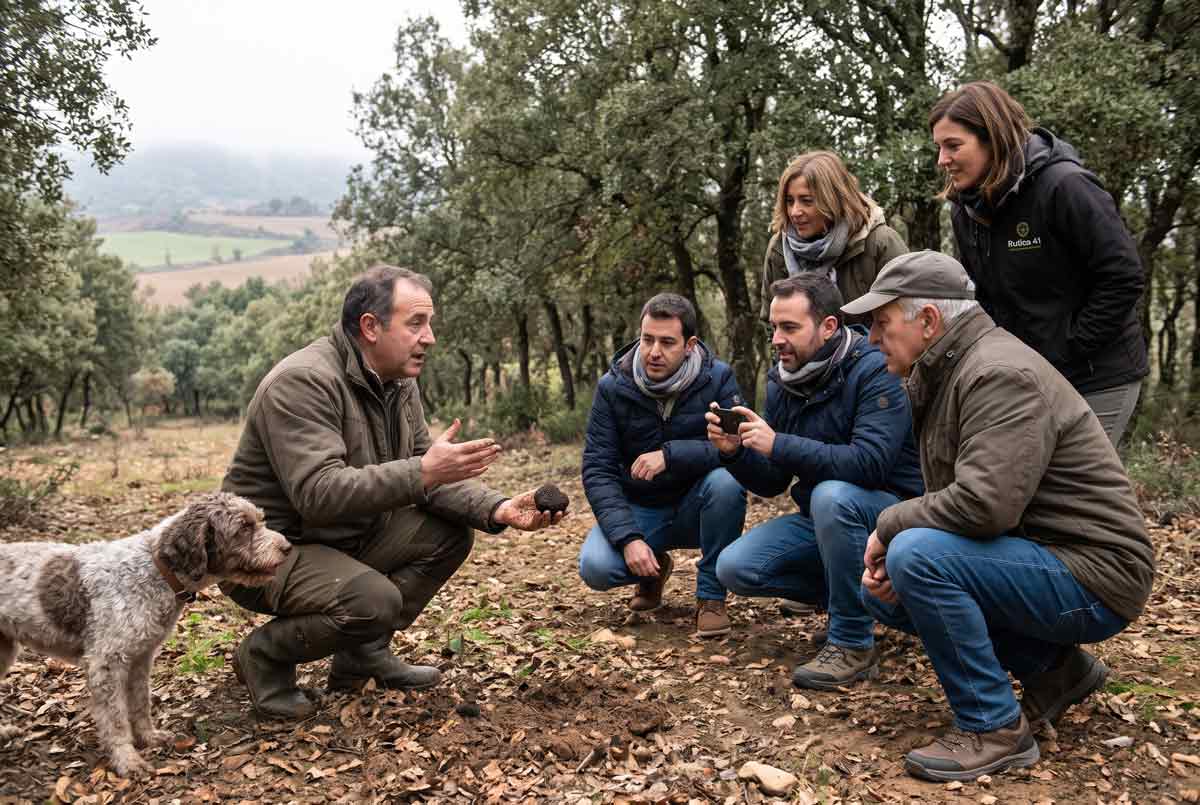
🍄 Curious about black truffle hunting in Aragón? Discover how the experience works, from searching in the countryside with a local truffle expert to tasting this seasonal product, in our guide to the truffle tour in Aragón.
More Opportunities to Chat with Local Guides and Producers
There is a direct link between the size of a group and how naturally a conversation flows.
When the format is small, the barrier between the person explaining and the person listening disappears: it becomes much easier to ask a spontaneous question while walking, request a dining recommendation, or pause at a historical detail without feeling like you are interrupting the script of the visit.
This dynamic makes special sense when meeting the people who craft the product and know the land firsthand.
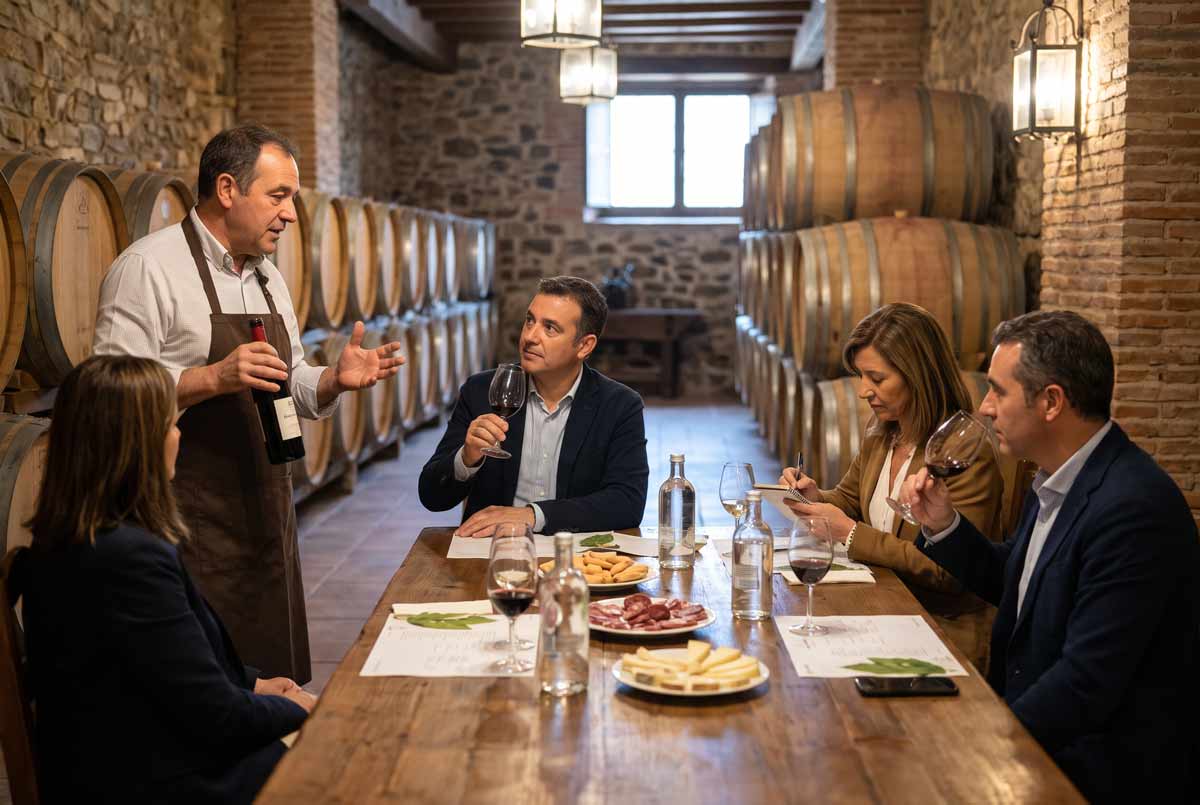
For example, during a visit to a winery in Cariñena, a small group allows everyone to gather around a barrel with the winemaker or guide, ask about the nuances of that vintage’s Garnacha, and understand the winemaking process in a participatory way.
🍇 Interested in discovering the wines of Cariñena? Learn more about one of Aragón’s historic wine regions, its wineries, grape varieties and day-trip possibilities in our guide to Cariñena from Zaragoza.
It is not about exclusive customization where the schedule revolves around a single traveler, but rather about warm, close attention where every voice fits into the same conversation.
Access to Markets, Bars, and Small Producers
In food and wine tourism, group capacity is not a matter of labels, but a physical and architectural limitation.
The most authentic, deeply rooted places are rarely designed to absorb large volumes of visitors at once, and holding a relaxed conversation becomes very difficult when twenty-five or thirty people try to squeeze into a small venue at the same time.
Organizing small group guided tours responds to very specific logistics that can be felt at every stop along the route:
- The Central Market of Zaragoza (Mercado Central): Walking among the historic stalls in a group of just a few people makes it possible to step up to the counter without blocking the way for locals doing their daily shopping, and to chat with the vendors without disrupting their workflow.
- The bars of El Tubo: Many of the traditional bars in Zaragoza’s historic center have narrow, charming tasting areas; visiting in a small format makes it possible to comfortably share a table or a corner of the bar counter as freshly made tapas come out of the kitchen.
- Wineries in Cariñena and olive oil tourism in Belchite: Stepping into a family tasting room or walking through century-old olive groves and the facilities of an olive oil mill in Belchite requires adapting to real working spaces, where producers open the doors to their own homes.
🍢 Want to discover Zaragoza’s best-known tapas area? Explore its narrow streets, local atmosphere and food culture in our guide to El Tubo in Zaragoza.
That said, traveling in a small group makes logistics easier and respects the surroundings, but it does not automatically guarantee access to these hidden gems on its own. Behind every open door lies prior work built on coordination and trust with the local hosts.
[Space for Jorge’s actual quote — Base example to validate or adjust with his exact words:]
“When we design a route at Rutica 41, the spot limit is dictated by the very place we are visiting. Before setting the group size, we think about the width of the market aisle, the chairs that fit around the tasting table at the winery, or the time the olive oil producer can dedicate to us without neglecting their mill. We prefer to bring fewer people so that the tavern keeper or farmer welcomes us as guests, not as a commercial tour.” — Jorge, Head of Rutica 41.
A Shared Experience with Fellow Travelers
Beyond logistics, small group excursions have a very special human component: what happens around the table.
Food and wine act as a natural common thread, and it is common for spontaneous conversations to spark among participants between courses.
During a shared tasting of Aragonese wines, for instance, comparing what nuances each person picks up in the glass, exchanging impressions on the ingredients of a tapa, or recommending spots for dinner that evening greatly enriches the route.
For solo travelers or couples, this format offers the chance to meet other travelers with very similar cultural and culinary interests in a relaxed atmosphere.
Of course, this social aspect is a matter of personal preference: while many travelers enjoy clinking glasses and chatting with new people, others prefer to guard their privacy after a workday or celebrate a special occasion solely with their inner circle.
Recognizing what you are in the mood for at any given moment is the key to choosing the right format.
When Is It Better to Book a Private or Custom Tour?
Although the small-capacity shared format suits most independent travelers, there are situations where weighing custom vs. group excursions clearly tips the scales toward exclusivity.
Opting for private and custom tours in Zaragoza or anywhere in Aragon is the most logical decision when the circumstances of your trip require control over timing, privacy, or an itinerary tailored to a group already formed before traveling.
Family Trips or Groups of Friends
When traveling with your own group of family or friends, booking an exclusive departure is usually the most comfortable and practical alternative.
Not only does it offer the peace of mind of sharing transportation and tables solely with people you know and trust, but it also allows you to match the pace of the day to the actual needs of the participants.
In multi-generational groups—ranging from children or teenagers to older adults with specific mobility paces—or when there are food allergies and intolerances requiring specific menus, a private tour makes logistics much easier. Furthermore, when splitting the overall rate among 4, 6, or 8 people already traveling together, the cost per person often comes very close to that of an open-group spot.
A great example is setting up a private excursion to Albarracín, combining a historical walk along its medieval walls with a dining experience tailored to the family’s tastes and schedule, provided the operator offers that format.
🏰 Want to explore Albarracín in more detail? If this medieval town is on your itinerary, discover its monuments, local food, surroundings and practical travel tips in our guide to what to do in Albarracín.
Celebrations, Couples, and Special Occasions
Some trips have a special reason behind them: a milestone birthday, an anniversary, a retirement, or a gift for a foodie.
In these scenarios, the main value of an exclusive tour is not necessarily looking for a movie-like romantic atmosphere, but enjoying a private setting where the conversation and the spotlight fall entirely on those celebrating.
Booking a tailor-made tour allows you to fine-tune details that are locked in advance on a shared departure: from choosing the pickup time to selecting which types of wines will be uncorked.
It is the ideal format, for instance, to arrange a private wine experience at a winery for a couple or a small group of friends looking to toast at their own pace and focus the tasting on their favorite varieties.
Corporate Events, Incentives, and Team Building Activities
In the professional sphere, the need to book a closed format responds to team organization and engagement goals.
Here, it helps to distinguish between hiring a standard private tour for a group of clients or executives, and designing a corporate event created specifically to foster internal cohesion and collaboration.
Incentive days and team building activities require coordinating meeting schedules, private transportation, exclusive venue bookings, and participatory dynamics that go beyond a conventional guided tour.
Within this tailor-made approach, Rutica 41 develops proposals designed for companies such as team cooking parties, clandestine dinners in unique venues, culinary treasure hunts through the city center, or private days out among vineyards and wineries.
How Much Does a Private Tour Cost Compared to a Shared Tour?
When comparing the price of a private tour versus a shared tour, it is common to look only at the final figure per person. However, to know whether a rate is fair or which format is more cost-effective in each case, it helps to break down how operational costs are split and what is actually included in the booking for small group guided tours or an exclusive format.
What Influences the Price of a Guided Tour
The cost of a food or cultural route does not come from an abstract label, but from the sum of tangible resources that make the departure possible.
You cannot directly compare an €89 activity with one priced at €195 or €250 without looking at what lies behind each proposal:
- Number of participants and fixed costs: On a shared departure, expenses such as the guide’s fee or the vehicle are split among several travelers; in a closed booking, those fixed costs are covered entirely by your group.
- Duration of the activity: The time commitment changes completely between a three-hour morning walking tour and a full-day excursion (8 to 10 hours) outside the city.
- Tastings and raw ingredients: The cost varies depending on whether the route includes several stops for tapas and glasses of wine, a full sit-down lunch at a restaurant, a technical tasting of four labels at a winery, or highly prized seasonal products like fresh black truffle.
- Transportation and transfers: Out-of-town departures that include pickup, transfers in a climate-controlled vehicle, fuel, and tolls have a different cost structure than urban walking tours.
- Access to producers and venues: Privately opening an olive oil mill, visiting a family winery, or coordinating a truffle farmer with their dogs out in the field involves booking the time of working professionals who pause their workday to host the group.
- Level of customization: Designing an itinerary from scratch, managing special reservations, or adapting schedules outside the regular calendar requires additional hours of production and coordination.
This difference in components can be clearly seen when reviewing the reference rates in the Rutica 41 catalog: a walking food tour through the Central Market and Zaragoza’s tapas districts starts at €89 (around three hours with tastings included); a wine excursion to Cariñena with transportation, winery visits, tasting, and a traditional lunch starts at €135; while a technical black truffle hunting experience in the field with wine pairing starts at €250, reflecting the seasonality of the product and the rural logistics involved.
When Is It Worth Paying for a Private Experience?
Determining when it is worth taking on the price of a private tour depends mainly on how many people are in your booking and what level of flexibility you are looking for.
If you are traveling solo or as a couple and your priority is making the most of your budget without giving up culinary quality or warm, personal attention, joining a small group tour is usually the most efficient decision: you get access to comfortable vehicles, local guides, and artisan producers while paying only for your individual spots.
On the other hand, when traveling with your own group of family, friends, or coworkers (for example, starting from 4, 6, or 8 people), requesting a quote for a private tour can be very competitive.
By splitting the fixed costs of transportation and the guide among all the members of your group, the price difference per person compared to a shared spot drops significantly—with the added advantage of choosing your own schedule and enjoying the route exclusively.
Small Group Tours in Zaragoza and Excursions Across Aragon
Putting all this theory into practice truly makes sense when the destination has a vibrant fabric of small shops, time-honored taverns, and family producers.
Choosing small group tours in Zaragoza and exploring the region through small group food excursions across Aragon responds directly to the character of this land: a region where the best flavors and landscapes are discovered up close and through face-to-face conversations with its people.
Food Tours in Zaragoza: Tapas, Markets, and Wines
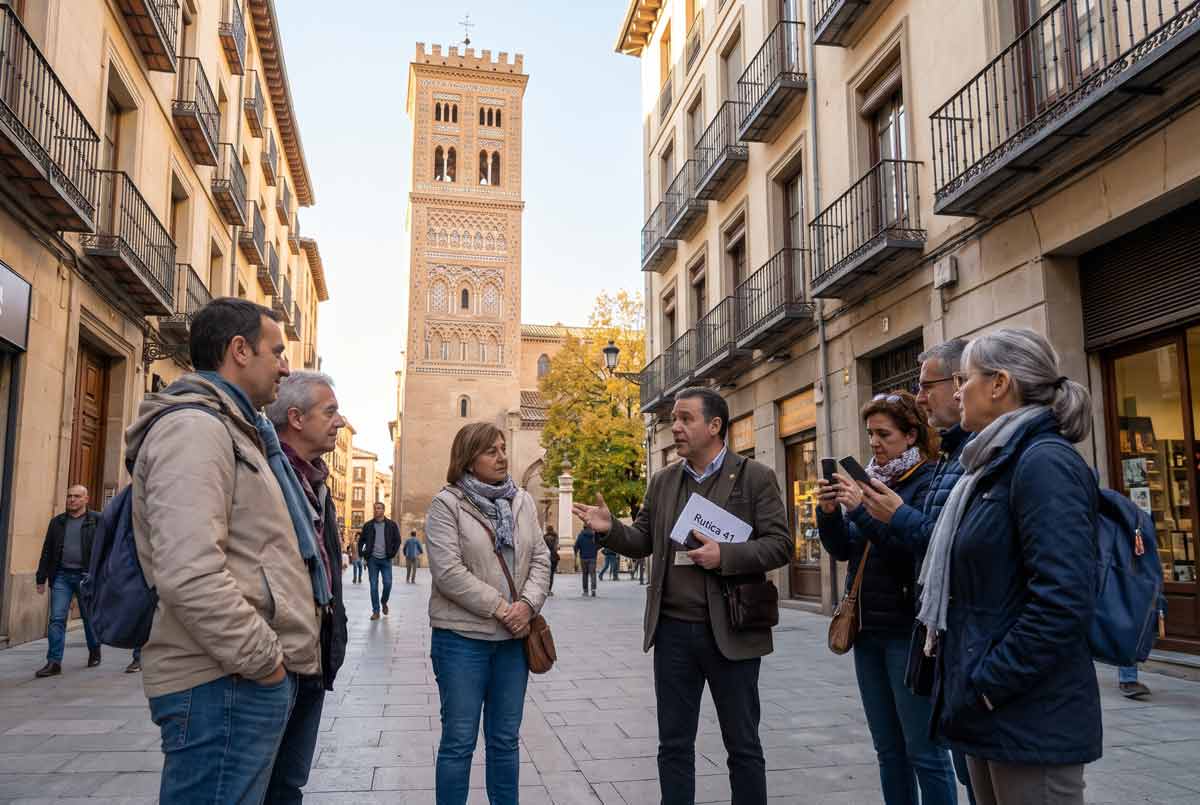
Zaragoza has a deeply rooted bar-counter and market culture that operates by its own codes.
Exploring the city from a culinary perspective is not just about stringing dishes together, but connecting the origin of the produce with both traditional and contemporary cuisine.
That is why a well-designed visit usually starts among the market stalls to understand the Ebro Valley vegetable gardens, local cheeses, or artisan preserves, and then continues through the streets of the historic center, tasting how those ingredients are interpreted at each bar counter.
In settings as iconic and bustling as the Central Market (Mercado Central) or the narrow streets of El Tubo, group size makes all the difference.
Visiting in a small format makes it possible to pause in front of a stall without getting in the way of daily shoppers, find a spot at the bar at the exact moment a freshly made tapa comes out, and listen to the explanations of a local guide who knows the story of each hospitality family, which specialty locals order at each venue, and which regional wine pairs best with it.

Featured experience: Walking tour connecting the architecture and history of the Central Market with guided tastings and local wines at selected taverns in the historic center.
Wine Tourism and Olive Oil Tourism: Experiences with Producers in Aragon
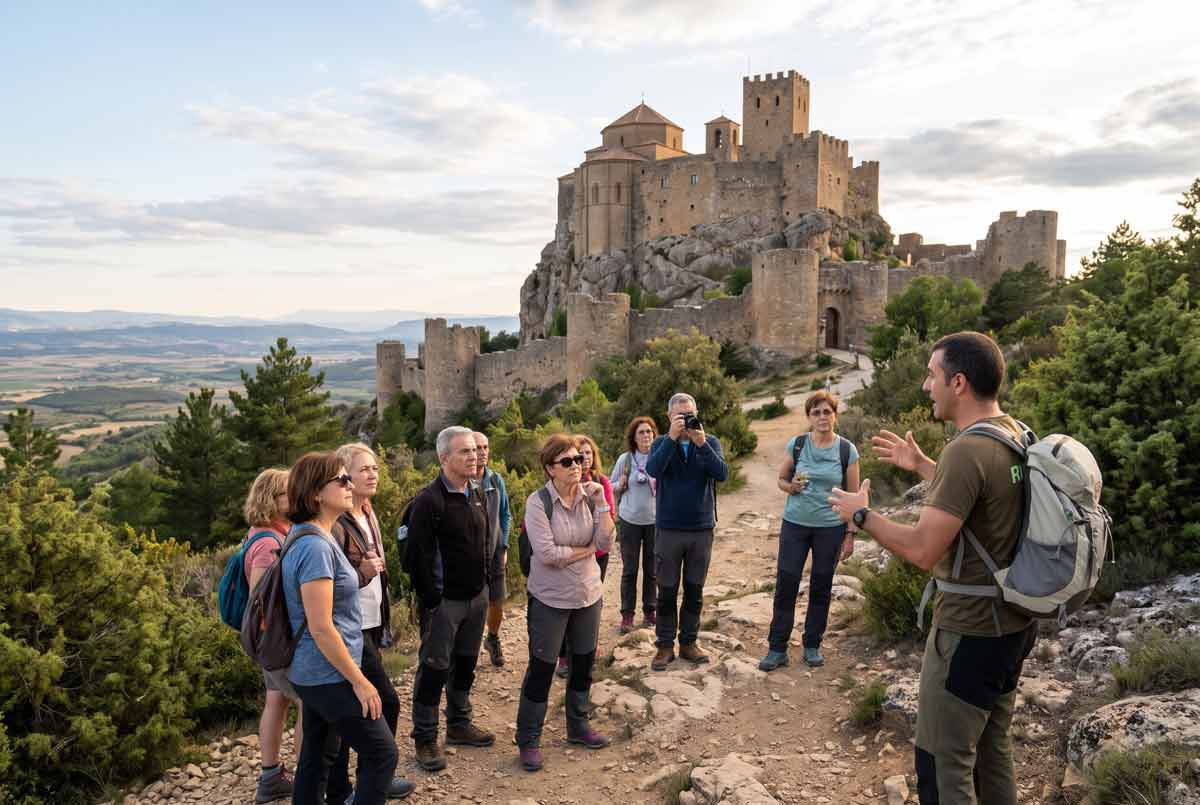
When heading out of the capital into the countryside, specialized tourism branches into two major protagonists of the Aragonese landscape that offer very distinct experiences: wine culture and olive oil culture.
On one hand, a day of wine tourism in Cariñena delves into one of Spain’s historic wine-producing regions, where the focus is on understanding the stony soils, the character of old-vine Garnacha, barrel aging, and comparative winery tastings.
On the other hand, an olive oil tourism experience in producing areas like Belchite takes travelers out into groves of century-old olive trees and inside traditional olive oil mills, focusing on olive varieties—such as Empeltre—, the mechanical cold-extraction process, and technical tastings of extra virgin olive oils.
In both formats, keeping a small group is what allows the winemaker, grape grower, or mill master to speak directly with visitors, answer questions about the year’s harvest, and share a table without the stiffness of an industrialized tour.
If you want to explore these landscapes in depth, you can check out how the Cariñena winery and wine tour or the combined route on the olive oil and wine tour in Aragon are structured.
Cultural Excursions Across Aragon in Small Groups
Beyond the table, Zaragoza serves as a strategic starting point for day trips to some of Aragon’s most remarkable historic towns and natural spaces.
🚐 Want to explore Aragón from Zaragoza? Medieval towns, castles, natural parks and historic landmarks can all be discovered on a day trip. Explore our selection of day trips from Zaragoza.
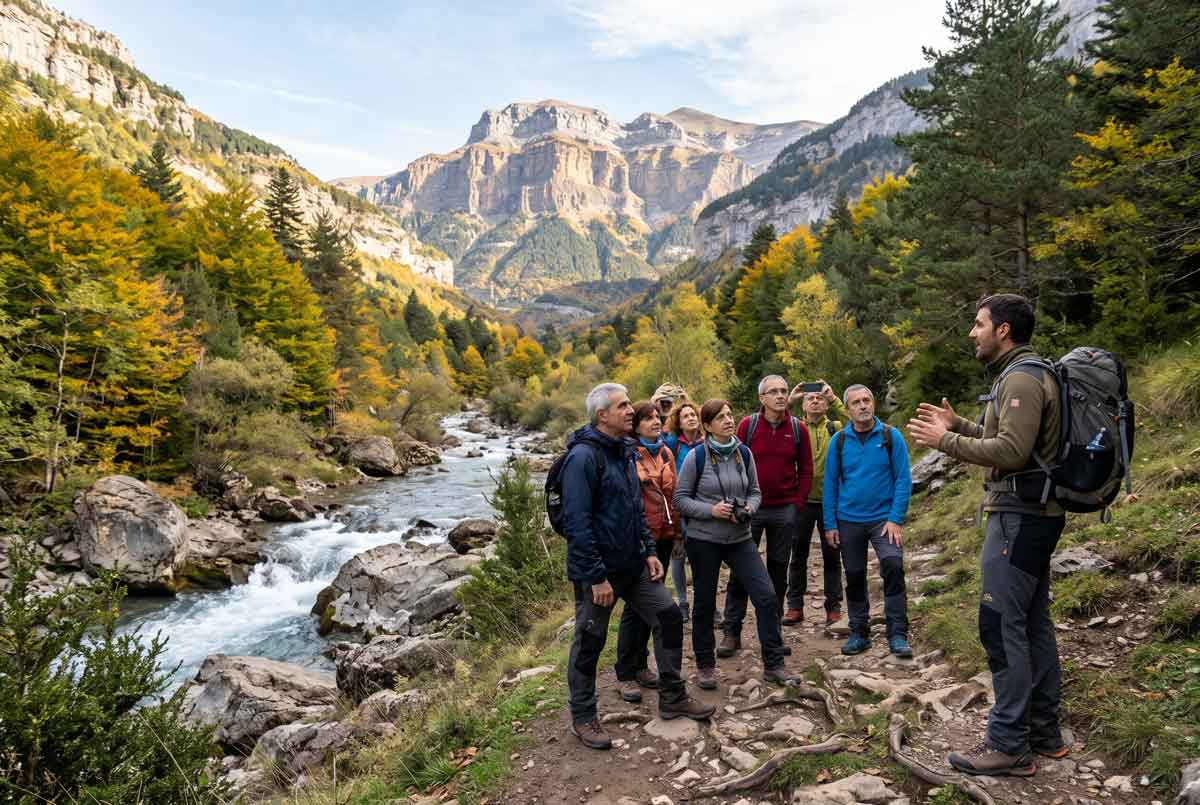
Destinations such as the medieval streets of Albarracín, the Romanesque fortress of Loarre Castle, the cliffside setting of the Monastery of San Juan de la Peña, or the Pyrenean valleys of Ordesa y Monte Perdido National Park involve driving along mountain roads and walking through cobbled old quarters.
Organizing these cultural excursions in small groups streamlines the day considerably: boarding and exiting the vehicle takes much less time, the group stays together along trails or narrow streets without needing loudspeakers, and lunch stops at local restaurants are managed much more smoothly.
That said, because these are scheduled full-day departures shared with other travelers, the departure time and itinerary are set in advance to make the most of daylight hours and monument bookings.
Therefore, before choosing your route from the catalog of day trips from Zaragoza, it is always worth checking the activity details to see what transportation is included, the estimated total duration, and the maximum number of participants planned for that departure.
What Type of Tour Should You Choose Based on Your Travel Style?
To bring all this information down to earth and decide which tour to choose for your next getaway, the quickest answer comes from looking at who is traveling with you. Here is how to solve the private tour vs. shared tour dilemma according to your travel profile:
If you are traveling solo or as a couple
Joining a small group tour is usually the most balanced option: you join an already organized departure without needing to put together your own group, enjoy a curated atmosphere for chatting during tastings, and keep an affordable individual rate. If, on the other hand, you are celebrating a very special occasion or prioritize absolute privacy with your schedule, request the private tour format.
If you are traveling with friends or family
Here, the key is balancing how many of you there are, your budget, and the group’s interests. If you are 3 or 4 adults looking to socialize and follow a tried-and-true route, a shared departure fits wonderfully; however, if there are more than 5 or 6 of you, you are traveling with different age groups, or you want to adapt times and stops, requesting a quote for a private or custom excursion usually pays off nicely when splitting the total cost among everyone.
If you are organizing a corporate trip
For professional teams, clients, or conferences, the most practical approach is always to work with an exclusive closed program.
This format makes it possible to match the exact headcount, align schedules with the corporate agenda, and turn the day into a participatory dynamic tailored to your team-building goals.
Ultimately, there is no single perfect format for every trip, but rather a right modality for each occasion.
The best choice will always depend on the type of culinary or cultural experience you feel like living, the people sitting at the table with you, and the level of flexibility you need throughout the day.
Private Tour vs. Small Group vs. Large Group: Comparison Table
When comparing a private tour vs. shared tour, the real difference depends on whether the open group is massive or small-scale.
While private custom vs. group excursions guarantee total exclusivity, a small group keeps spots limited to foster warm, personal attention and culinary access without taking on the full cost of a closed booking:
| Feature | Large Group Tour | Small Group Tour | Private Tour |
|---|---|---|---|
| Participants | Numerous | Limited spots | Only your group |
| Exclusivity | No | No | Yes |
| Itinerary | Pre-established | Pre-established | Fixed or adaptable |
| Guide’s Attention | Shared among many | More opportunities for interaction | Dedicated to your group |
| Schedule | Fixed | Generally fixed | Greater flexibility depending on booking |
| Local Gastronomy | Depends on the route | Facilitates visits to small venues | Can be adapted to your interests |
| Connection with Producers | More limited by group size | Facilitates dialogue | Can be more individualized |
| Transportation | Depends on the activity | Depends on the activity | According to contracted service |
| Socializing | High, with many people | Close, with a few travelers | Within your own group |
| Price | Generally more budget-friendly | Mid-range, depending on the activity | Custom quote based on service and group |
| Ideal For | Travelers prioritizing budget | Couples, solo travelers, and small groups | Families, closed groups, and companies |
Note: The features shown in this table are for guidance only and depend in each case on the tour operator, the selected route, and the specific conditions of the contracted service.
Frequently Asked Questions About Private and Small Group Tours
Is a small group tour a private tour?
No, a small group tour is not a private tour, but rather a shared departure with a strict limit on spots.
The main difference lies in the exclusivity of the booking and not just the number of attendees: while on a private experience only you and your companions participate, in a small group format you will share the route with travelers from other independent bookings.
At Rutica 41, we always specify this condition so you know with complete transparency what style of visit you are booking in advance.
How many people are usually on a small group tour?
There is no universal number across the entire tourism industry, as the maximum capacity of a small group tour varies depending on the nature of the route, the operator, and the physical space of the venues visited.
On culinary experiences like the Rutica 41 Central Market route, small groups of 5 to 10 participants are planned so everyone can move comfortably among the stalls. However, since each departure has its own logistics, we recommend always checking the activity details for each experience before booking.
Can I book a small group tour if I am traveling solo or as a couple?
Yes, small group guided tours are designed specifically so that solo travelers and couples can join by booking individual spots without needing to form their own group or take on the cost of an exclusive reservation.
Keep in mind that some shared departures require reaching a minimum total number of participants to be confirmed, depending on the activity’s conditions.
Beyond making the most of your budget, this format is ideal for sharing a table and conversation with like-minded travelers who choose routes from our catalog of experiences.
What is included in the price of a food tour in Zaragoza?
The services included in a Zaragoza food tour depend directly on the selected route, so not all activities share the same conditions. Generally, rates include the accompaniment of a local guide and the tastings of tapas, market produce, or wines scheduled in the itinerary, while out-of-town excursions usually add transportation and admission to wineries or olive oil mills.
Before confirming your spot, always check each tour’s page for the duration, the breakdown of inclusions, and the cancellation policy.
Can a shared excursion be turned into a private tour?
Yes, at Rutica 41 you can request for any of the departures in our catalog to be organized as a private tour for your group, or propose an itinerary built from scratch. It is worth distinguishing between closing an existing route exclusively for your party and designing a custom experience by modifying schedules, stops, and tastings.
In both cases, guide and producer availability as well as the final quote require prior confirmation based on the number of attendees and the date through our private and custom tours section.