
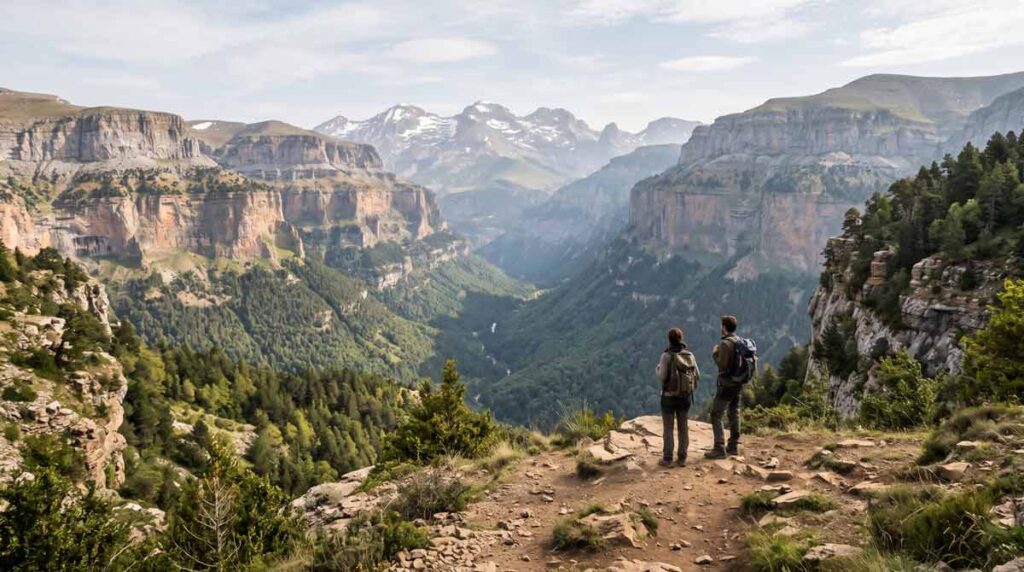
The Spanish Pyrenees Beyond Hiking: Villages, Views and Local Food
Explore Aragón and its foothills through medieval towns, mountain scenery and regional flavors, with practical advice for planning an unhurried trip.
You want the mountain views. You also want a good lunch, a village worth lingering in and enough time to understand what you are looking at.
A full day on a hiking trail may be one option, but it does not have to set the agenda.
The Spanish Pyrenees lend themselves to a trip built around culture, scenery and food.
In Aragón, you can combine medieval Aínsa, the heritage of Jaca and the landscapes around Ordesa with wine country and castles in the foothills.
This guide focuses on that part of northern Spain. It explains where to go, how the stops fit together and what “beyond hiking” means in practice, including a suggested five-day route from Zaragoza.
Where Are the Spanish Pyrenees, and Why Focus on Aragón?
The Pyrenees form the mountain border between Spain and France. On the Spanish side, they extend across Navarra, Aragón and Catalonia.
Aragón occupies the central section, with mountain valleys, historic towns and access to Ordesa y Monte Perdido National Park.
The geography matters when planning. Aínsa, Jaca and Canfranc belong to the mountain journey, while Alquézar, Somontano wine country and Loarre introduce the foothills and landscapes farther south. Zaragoza is the starting city for this itinerary; it is not a Pyrenean town.
For travelers arriving from the United States, this makes a useful regional addition to a wider Spain vacation.
Choose a manageable section rather than trying to cross the entire range.
This route concentrates on northern Aragón, so time can go into visits and meals as well as driving.
Think of the route as three connected landscapes. There are the higher mountains and valleys around Ordesa and Canfranc, the historic towns that help you understand life in the region, and the wine-growing and agricultural country to the south.
Moving between them gives the trip variety: a mountain panorama one day, a Romanesque monument another, and a conversation about food over lunch.
That variety is the reason to focus your Spanish Pyrenees vacation on one region.
You do not need a checklist covering every celebrated valley in northern Spain.
If your interests include architecture, regional cooking and photography, a carefully chosen section of Aragón can fill several days without making hiking your principal activity.
Explore the cultural side of Spain
The villages and monuments of northern Aragón can become part of a wider journey through Spain’s history, architecture and local traditions. Discover cultural tours in Spain →
Can You Enjoy the Spanish Pyrenees Without Hiking?
Yes. You can explore historic towns, visit monuments, taste regional wines and plan scenic outings without building your vacation around long mountain hikes.
The key is choosing the right visits and understanding their physical demands.
“Beyond hiking” means enjoying the mountains through a mix of experiences, which can include walking.
In Ordesa, time on foot can be part of discovering the landscape.
Medieval streets, monuments and scenic outings each have their own surfaces, slopes and walking requirements.
| Place | Main appeal | Walking and surfaces | Transport and advance checks |
|---|---|---|---|
| Aínsa | Medieval streets, main square and scenery | Historic paving; the chosen route determines slopes and steps | Arrange arrival, parking or drop-off; check the route through the old town |
| Alquézar and Somontano | Village heritage and wine country | Cobbled village streets; winery layouts vary | A vehicle connects the stops; confirm tasting reservations and walking requirements |
| Ordesa area | Mountain scenery and time outdoors | May combine vehicle travel and walking; duration and terrain depend on the excursion | Confirm operator, vehicle route, walking and seasonal access |
| Jaca | Cathedral, heritage and food | Urban walking; monument access varies | Check tickets, opening hours and the scope of each visit |
| San Juan de la Peña and Canfranc | Monastic and railway history | Site-specific paths, steps and interiors | Plan road transfers and confirm the spaces included in booked visits |
| Loarre | Romanesque castle and foothill views | Numerous stairs inside the castle | Road access; check official access information before booking |
Use this as a planning overview, rather than an accessibility assessment.
If stairs, uneven ground or continuous walking affect your choices, ask for details of the exact visit.
Prefer to explore with a local guide? Discover a private journey through Northern Aragón.
Describe the Day You Actually Want
“We do not hike” can mean very different things. You might enjoy an hour exploring a town but have no interest in a mountain ascent.
You might prefer short walks separated by seated breaks. Or you might happily walk all afternoon while wanting to avoid exposed paths.
Explaining that preference gives a planner much more useful information than choosing an activity labeled easy.
For each proposed visit, separate total time on foot from the longest continuous walking section.
Then consider stairs, slopes and opportunities to stop. A short visit with steep steps may suit you less than a longer walk on a comfortable surface.
These are practical choices about the kind of vacation you want, regardless of age or fitness.
Places to Visit Beyond the Hiking Trails
Aínsa: Medieval Streets and Views
Aínsa is a rewarding choice when you want history and mountain scenery in the same stop. Its old town sits above the meeting of the Ara and Cinca rivers, with the arcaded Plaza Mayor at the heart of a visit.
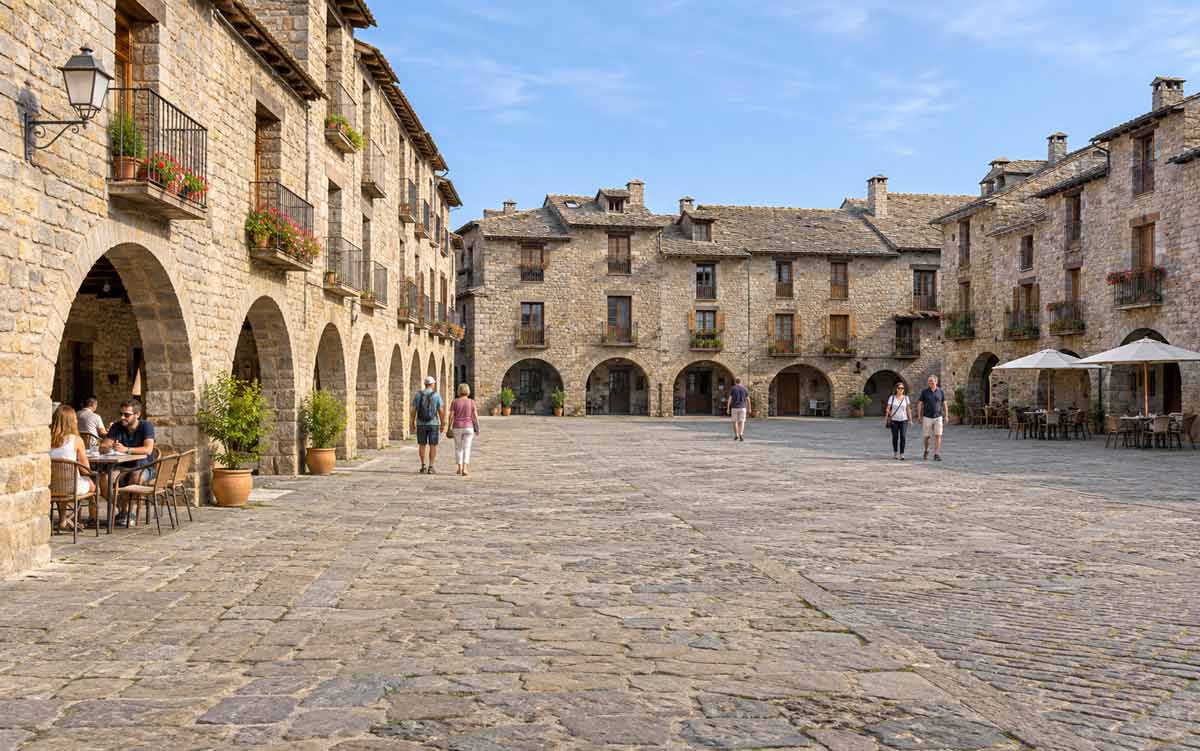
Build time around the square, historic lanes and castle area. Choose a few places to explore properly, then leave space for lunch or photographs.
Aínsa works particularly well for travelers who enjoy the atmosphere of a town as much as its individual monuments.
It also pairs naturally with a stay in nearby Boltaña. Check where your visit starts and finishes, since the approach and streets you choose affect the amount of climbing involved.
For more cultural inspiration, explore our guide to medieval towns in Spain.
For a first visit, let the old town provide the structure. Start with the broad space of the main square, then explore a smaller selection of streets rather than trying to cover every corner.
The contrast between the enclosed lanes and the surrounding landscape is part of Aínsa’s appeal.
Give yourself time to notice stonework, doorways and the way the settlement relates to the country around it.
Aínsa is also a useful choice when your group has mixed interests. Someone interested in architecture can focus on the buildings while a keen photographer enjoys the streets and views.
Agree a meeting point before separating, and keep any additional monument visit optional within your own plan.
A relaxed stop works best when everyone understands how much unstructured time they have.
Alquézar and Somontano: Heritage and Wine
Alquézar brings together stone streets, the silhouette of its collegiate church and the setting of the Vero River canyon.
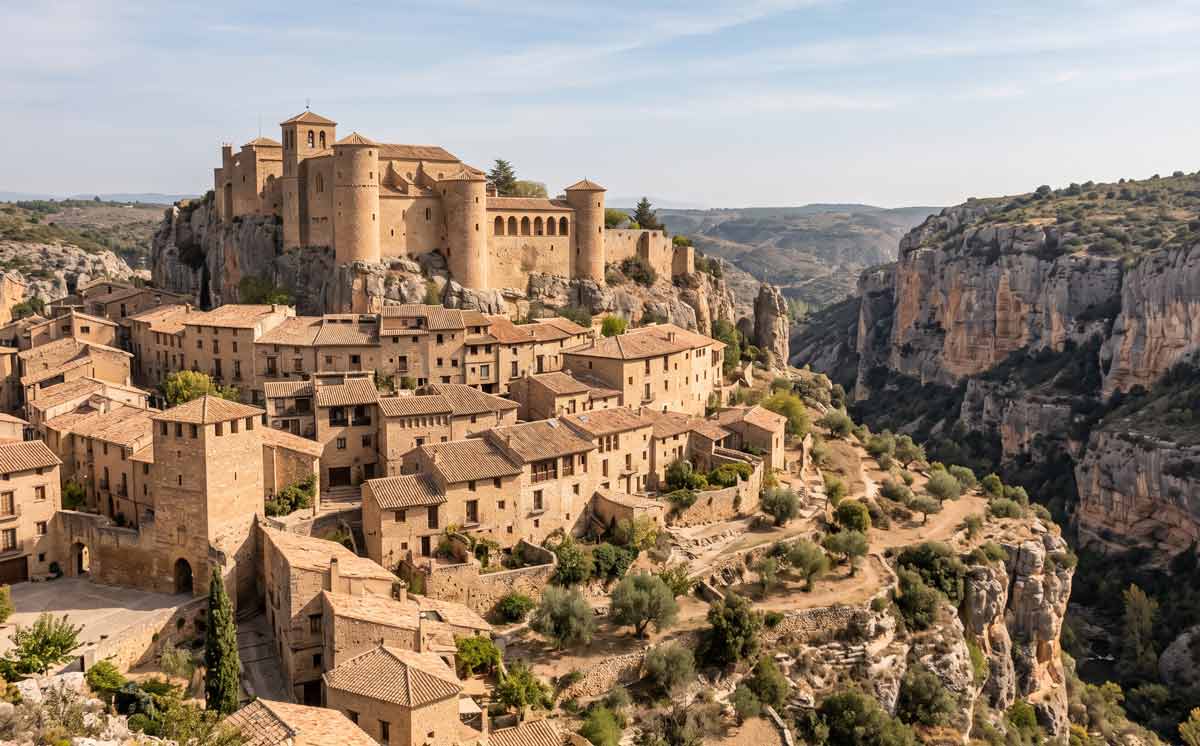
It makes an appealing introduction to the southern side of the journey, where heritage visits can be combined with a winery appointment in Somontano.
There is an important distinction here: visiting Alquézar is different from walking the Río Vero footbridge trail.
The village visit and the canyon route are separate activities. You do not need to include the footbridges to enjoy the town.
For a day centered on culture and food, plan the village and a tasting with room for lunch between them.
Confirm the winery’s language, reservation requirements and route through the property. The village itself still involves historic paving and slopes.
The combination works because the two experiences answer different questions.
Alquézar shows how a historic settlement sits within a dramatic landscape. A winery visit turns your attention toward what grows in the surrounding countryside and how it reaches the table.
Give each enough attention to feel like a visit, rather than fitting the village between two tasting appointments.
If wine is a particular interest, tell the winery whether you want an introductory tasting or a more detailed conversation. If someone in your party does not drink, ask what they can enjoy during the appointment.
There is no need to turn the whole day into a wine tour: one well-chosen visit can provide a satisfying introduction to Somontano.
Travelers considering the canyon activity should read the official Alquézar footbridge route information separately.
Treat it as an outdoor excursion with its own requirements, rather than an incidental extension of a village stroll.
Ordesa: Mountain Views and Time to Explore on Foot
Ordesa is the landscape-focused choice: cliffs, forests and mountain panoramas. Walking can be part of the experience, giving you time to pause, take photographs and enjoy the landscape beyond the vehicle.
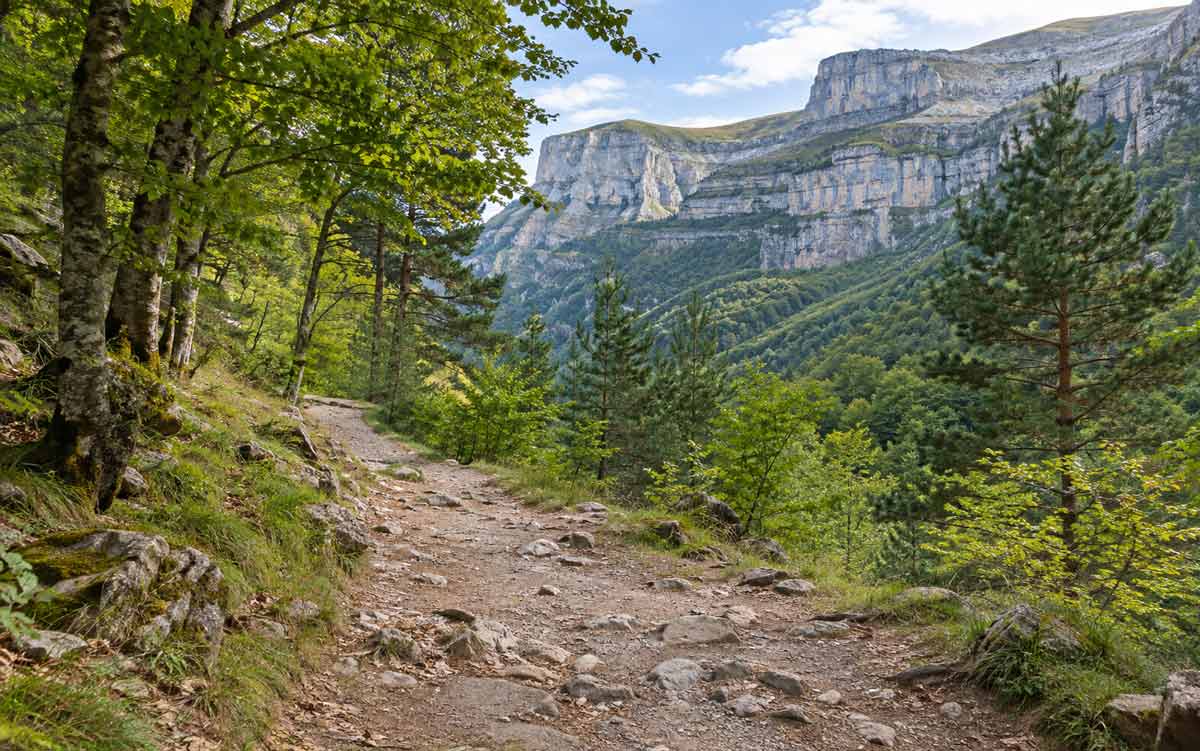
A trip beyond hiking can still include a walk in Ordesa without making every day of your vacation a mountain hike.
The right balance depends on the excursion and your preferred pace. Some outings combine vehicle travel with sections on foot, and those walks may be an essential part of the route rather than an optional extra.
Agree the walking time, terrain and elevation changes before booking so you can choose an experience you will enjoy.
A 4×4 viewpoint excursion and the shuttle to the Pradera de Ordesa are different services.
They should not be treated as interchangeable ways to reach the same places.
Before choosing a scenic outing, ask which route it follows, where the vehicle stops and how much walking is required.
Find out whether walking sections are optional, what the ground is like and what happens if weather changes the plan.
A vehicle-based trip can still include rough tracks and time on foot.
Plan your visit to Ordesa
Explore the park’s landscapes, access options and walking routes before choosing the experience that suits your trip. Read our Ordesa and Monte Perdido National Park guide →
Our Ordesa and Monte Perdido National Park guide explores the destination in more detail.
If you are considering a separate Ordesa day trip from Zaragoza, confirm its walking requirements specifically; they may differ from a multiday private itinerary.
Start by deciding what you most want from Ordesa: a broad panorama, time in a valley setting or a guided explanation of the landscape.
Those priorities may lead to different routes. A photograph of a famous viewpoint does not tell you whether a particular tour visits it, how long the vehicle journey takes or what walking comes afterward.
Keep the day spacious enough to respond to conditions. Avoid planning an essential restaurant booking or a tightly timed transfer immediately after a mountain excursion unless the operator has confirmed the sequence.
For photography, allow the outing to follow safe access and weather rather than assuming a particular view or light can be guaranteed.
If the available excursion requires more walking than you want, choosing Aínsa for that day is a valid change of emphasis.
You are building a trip around your interests, and a cultural day can be just as rewarding as a mountain outing.
Jaca: Romanesque Heritage and Local Flavors
Jaca adds a town-based day to the journey. Its Romanesque Cathedral of San Pedro and distinctive Citadel provide a clear cultural focus, while the center offers places to stop for food and a break between visits.
A manageable plan is to choose your main heritage visit first, then allow time for lunch and a walk through the center.
If you want to include both monuments, check their schedules before filling the rest of the day.
Jaca can also serve as a base for exploring the western part of this route.
Spending the evening here gives you time to enjoy the town after sightseeing, rather than arriving only long enough to photograph a landmark.
For an art-focused visit, consider whether the Diocesan Museum belongs in your day alongside the cathedral.
For an interest in defensive architecture, the Citadel may be the stronger second stop. Choosing a theme helps you give the buildings context instead of moving through a series of unrelated interiors.
Keep part of the day for ordinary town life. Browse, sit down for a drink and choose lunch with the same care you give the monuments.
Jaca is useful in this itinerary precisely because the experience can continue between formal visits.
You do not need to fill every gap with another attraction to make the day worthwhile.
San Juan de la Peña and Canfranc
These two stops offer different perspectives on travel through the mountains. At San Juan de la Peña, the old monastery’s setting beneath an overhanging rock is central to the experience.
Its history connects the landscape with the medieval Kingdom of Aragón.
Canfranc shifts the story to rail travel and the border with France.
Its monumental international station makes a striking contrast with the monastery.
They can form a heritage-focused day from the Jaca area, provided transfers and appointments are planned realistically.
For each site, check which buildings or interior spaces your ticket includes. At Canfranc, viewing the station exterior, joining a guided visit and entering hotel spaces are different experiences.
At San Juan de la Peña, distinguish the Old Monastery from the New Monastery when arranging your visit.
They occupy separate locations, so parking and any transfer between them belong in the plan.
The official Aragón visitor information publishes access notices and practical arrangements. Check it before setting out, particularly if you are driving yourself.
At Canfranc, decide whether your priority is the station’s architecture, its history or a reserved interior experience.
That choice matters more than adding a vague “station visit” to your schedule. Ask the organizer to name the experience, its language and the areas it includes so you know what you are looking forward to.
Loarre: A Castle Stop in the Foothills
Loarre Castle gives the journey a memorable architectural finish. Its walls and Romanesque spaces sit above the plains of the Hoya de Huesca, bringing the route back toward the foothills.
Take a closer look at Loarre Castle
Discover the castle’s history, Romanesque architecture and practical visiting tips before adding this foothill stop to your itinerary. Explore our guide to visiting Loarre Castle →
This is also a stop where physical demands deserve particular attention.
The castle’s official information describes numerous stairs and confirms that the interior is not wheelchair accessible. Visitors who find stairs difficult should discuss the visit before committing to it.
Check the official Loarre Castle visitor information for current conditions and tickets. When planning the return to Zaragoza, leave enough room for the visit and any agreed food-related stop.
Approach Loarre as a monument to explore at a deliberate pace. Its setting helps explain why a castle was built here, while the interior asks you to pay attention to changes in level and circulation.
If stairs are a concern, agree an alternative before the day of your visit; do not assume an exterior stop offers equivalent access or the same experience.
Loarre also changes the visual rhythm of the journey. After mountain valleys and town streets, the outlook toward the plains places the higher country in a broader setting. It is a fitting final heritage stop for this route, provided the visit leaves enough time for your onward plans.
What to Eat and Drink in Aragón and Somontano
Food helps connect the different landscapes on this route. The mountain towns, agricultural areas and vineyards each add something to the table.
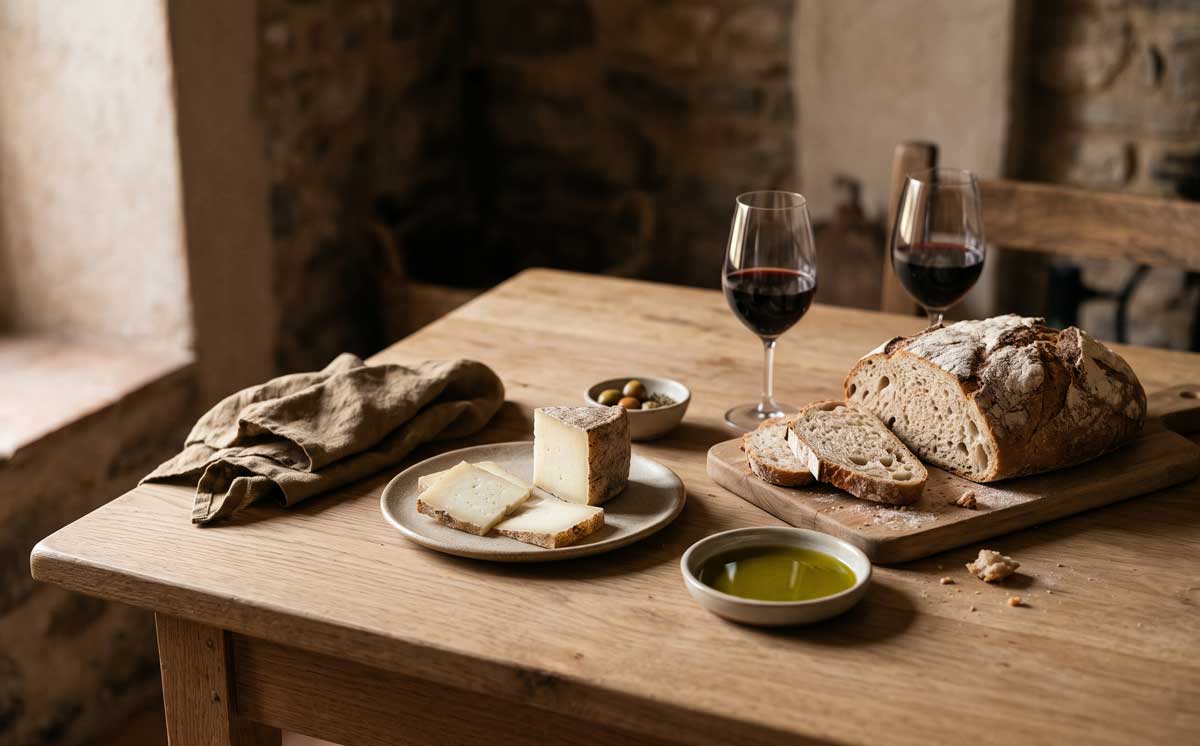
These are five useful starting points; availability depends on the season and the places you visit.
- Somontano wine. A winery tasting can introduce the wine-growing area south of the higher mountains. Reserve ahead and arrange transport if you plan to drink.
- Artisan cheeses. Ask which producer made the cheese and what milk it uses. A small tasting offers an enjoyable way to explore local differences.
- Ternasco de Aragón. Look for this regional lamb specialty on local menus, and ask how the restaurant prepares it.
- Extra virgin olive oil. A tasting adds another perspective on the foothills and agricultural landscape. A mill visit should be arranged separately from assumptions about whether production is underway.
- Barbastro pink tomato. When in season, this local product is worth looking for on menus and at markets. Let seasonal availability guide your choice.
A winery visit, a restaurant meal and a producer tasting are distinct bookings.
For a private trip, agree which experiences form part of your proposal and mention dietary preferences when planning.
The Somontano tourism guide to local food offers more regional context.
Make Food Part of the Experience
You do not need specialist knowledge to enjoy a regional tasting. Start with a simple question: what should we notice? With olive oil, compare aromas and the sensations that remain after tasting.
With cheese, ask about the milk and maturation. With wine, discuss the bottle in front of you rather than feeling obliged to recognize a long list of technical terms.
A useful approach is to choose one experience in which food is the main activity, then let other meals provide a more informal introduction.
That might mean a winery appointment followed by a different day devoted to an unrushed restaurant lunch.
Booking several elaborate tastings back to back can leave little appetite, time or attention for the rest of the journey.
For restaurant meals, explain dietary requirements before a menu is agreed and ask about the actual dishes available.
Do not assume a regional specialty will be served everywhere or that a tasting can be changed on arrival.
If food is one of your main reasons for traveling, share that early so the route can give it the space it deserves.
Seasonality is part of the pleasure. Ask what is good during your visit instead of insisting on one ingredient you saw in a photograph.
A simple plate made with something in season can tell you more about the area than a menu chosen months ahead without regard to availability.
Make wine part of your wider Spain journey
If your Somontano visit sparks an interest in exploring more wine country, discover other Spanish regions and ideas for planning private winery experiences. Explore Spain’s wine regions and private wine tours →
A Relaxed Five-Day Route from Zaragoza
Five days and four nights allow you to combine several parts of northern Aragón without returning to Zaragoza every evening.
This suggested outline connects the cultural, food and landscape experiences discussed above; final arrangements for a private journey depend on the agreed proposal and availability.
| Day | Suggested focus | Planning choice |
|---|---|---|
| 1 | Somontano, Alquézar and Boltaña | Combine wine country and village heritage |
| 2 | Aínsa or an Ordesa outing | Choose culture or a scenery-focused excursion |
| 3 | Jaca | Allow time for heritage and food |
| 4 | San Juan de la Peña and Canfranc | Coordinate visits with road transfers |
| 5 | Loarre, olive oil and Zaragoza | Check castle stairs and the return plan |
The second day is a choice between alternatives, rather than a promise to include both. If both matter to you, discuss a longer stay or a revised itinerary.
Day 1: Settle Into the Region Through Wine and Village Life
Use the first day to make the transition from Zaragoza into northern Aragón. Somontano and Alquézar introduce the food and heritage themes before you continue toward Boltaña.
The planning priority is to coordinate the tasting, village visit and lunch so the day feels coherent.
If you are arriving in Spain immediately beforehand, discuss whether an extra night before departure would make the start more comfortable.
Day 2: Choose the Experience That Matters Most
Aínsa offers a day centered on medieval streets, local history and time to linger. An Ordesa outing places the emphasis on mountain scenery, with walking as part of the experience where the chosen route includes it.
Make this choice according to your interests and the confirmed walking involved. If neither person wants to compromise, ask about extending the journey instead of assuming both experiences fit comfortably into the same day.
Day 3: Give Jaca Time Beyond the Main Monument
Moving toward Jaca shifts the trip into its western section. Treat the transfer as part of the day when choosing your heritage visits.
Leave room to settle into your accommodation and enjoy the center, rather than booking a dense afternoon of timed admissions.
An evening in town is valuable time in its own right, particularly if you enjoy discovering places through their restaurants and streets.
Day 4: Connect Two Different Chapters of History
San Juan de la Peña and Canfranc bring monastic and railway heritage into the same journey.
This day benefits from careful sequencing because the sites have separate access arrangements and appointment times.
Let confirmed visits determine the order and lunch plan. If you particularly enjoy either subject, discuss spending longer at that site and simplifying elsewhere instead of treating every stop as equally important.
Day 5: Return Through the Foothills
The proposed finish combines Loarre, an olive oil experience and the return to Zaragoza.
Discuss the castle’s stairs before the itinerary is finalized, and confirm what the olive oil stop actually includes.
Keep the end of the day realistic if you have an onward connection. A later departure or an additional night in Zaragoza can be worth considering when it protects the final day from feeling rushed.
Explore Northern Aragon at a Slower Pace and request a proposal for your dates.
Where to Stay: Choosing a Practical Base
Choose accommodation after deciding which places matter most. A hotel that looks central on a broad map may still create repeated drives between different valleys.
Aínsa or Boltaña are worth considering for the eastern part of this selection, especially if Aínsa and the Ordesa area are priorities.
Jaca is a useful candidate for the western heritage stops, including San Juan de la Peña and Canfranc.
For the full route, changing bases can make more sense than using one hotel throughout.
For a shorter trip, fewer stops and one base may be preferable. Compare the actual daily drives before deciding.
Check parking or drop-off arrangements, room access, dinner options and the walk between your room and shared spaces.
A hotel’s star rating alone does not answer those questions.
Choose Your Evenings as Carefully as Your Days
Before selecting a base, picture what you want after the last visit. Do you want to walk to dinner, spend time in the hotel or sit somewhere with a view? A country setting and a town-center address create different evenings, even when both look convenient for the daytime route.
Check whether dinner requires another drive and whether that fits the way you want to travel.
If you prefer to unpack once, reduce the geographical spread of the trip.
If seeing both the eastern and western parts is the priority, changing accommodation can be a reasonable trade-off. The best places to stay in the Spanish Pyrenees depend on the visits you choose; there is no single base that is best for every valley and every traveler.
Getting Around: Self-Drive or a Private Journey?
A self-drive trip gives you control over your stops and accommodation. It suits travelers who enjoy organizing reservations and are comfortable navigating unfamiliar roads.
Allow time for parking, village access and breaks, rather than treating map estimates as the whole day.
A private journey can coordinate transport and visits within an agreed itinerary.
It may appeal if you would rather discuss your preferences with a local organizer and spend less of your trip managing logistics.
Compare the quote carefully: guiding, meals, tastings, entrance tickets and changes should be clearly explained.
Public transportation can serve some parts of a visit, but this particular combination of towns, monuments and wineries requires checking connections individually. Do not assume that reaching a town also solves the onward journey to every site.
Have time for a shorter escape?
If a multiday journey does not fit your schedule, consider a day trip focused on one destination or experience. Discover day trips from Zaragoza →
If you have less time, see our selection of day trips from Zaragoza and choose a smaller area to explore.
Compare the Whole Day, Not Just the Drive
For a self-drive trip, build a daily plan that includes collecting the car, loading luggage, finding parking, reaching the entrance and being ready for any reserved visit. A route can look short on a map while still leaving little room between appointments.
Keep the most important booking as your anchor, then add other stops only when the day has room.
For a private journey, ask what support is provided before and during the trip.
Confirm whether you have a guide throughout or only at particular visits, how the driver and vehicle are arranged, and whom to contact if plans need attention. The word private describes the booking format; the proposal should explain the actual service.
If you want to use public transportation, start with the connections available for your dates and design the itinerary around them.
You may choose fewer bases, longer stays or separately arranged transfers.
Reaching Jaca or another town is one part of that plan; connecting to a winery or a monument outside the center is a separate question.
Fit Northern Aragón Into a Wider Spain Vacation
If this is one section of a longer trip from the United States, work backward from the days you can actually spend in the region.
Keep international arrival, onward travel and the five-day journey distinct in your planning. Avoid counting a travel day twice by imagining it as both a full sightseeing day and a connection day.
Share your wider itinerary when requesting a proposal. Knowing where you will be beforehand and where you are going afterward helps identify a sensible starting time and finish.
Confirm any train or flight connection against the final ground itinerary before buying tickets that leave little flexibility.
Connect the Pyrenees with the rest of your trip
Build your time in northern Aragón into a wider journey that takes account of your interests, travel pace and onward destinations. Plan a private travel itinerary in Spain →
When to Visit and What to Check Before Booking
Choose your dates around the experiences you value most. A village-and-food itinerary and a high-mountain outing do not have identical seasonal requirements.
Spring and fall are worth considering for a trip centered on culture and scenery, while summer may suit travelers whose dates align with school vacations.
Whatever the season, verify temperatures, opening days and excursion availability for your actual itinerary.
Winter requires particular attention to weather, daylight and road conditions.
For the Ordesa Valley shuttle, consult the current OrdesaBus operating calendar. Service runs during specified periods, and published schedules should be checked for your travel year.
That calendar does not establish the availability or route of a separate 4×4 excursion.
Before booking, confirm the language of guided visits, time spent on foot, stairs and surfaces, cancellation terms, accommodation and meal arrangements. If connecting with an onward train or flight, have the return schedule checked before committing to tickets.
Match the Season to Your Priorities
For a culture-led trip, begin with the monuments, restaurants and producer visits you want, then check which dates support that combination.
For a journey in which Ordesa is essential, confirm the relevant excursion first.
The order of planning changes depending on whether mountain scenery is the central reason for traveling or one possible element.
Traveling outside the busiest periods can suit someone seeking a quieter rhythm, but do not equate quiet with everything being open and immediately available.
A limited opening schedule can matter more to your day than the number of visitors.
Reserve the experiences that require appointments, then keep the remaining time flexible.
Pack for a Mixed Journey
Think about the range of settings rather than dressing exclusively for either a city break or a hiking vacation. Bring footwear you already find comfortable on uneven paving, layers for changing conditions and a small bag for the items you want during visits.
Check the forecast for the actual places on your route rather than using Zaragoza’s weather as a guide to every mountain stop.
For a booked excursion, follow the operator’s specific advice. Ask whether you should bring water, additional layers or anything else for the vehicle and walking sections.
Keep the items you may need within reach instead of packing them beneath your luggage during a transfer day.
Frequently Asked Questions
Can you visit the Spanish Pyrenees without hiking?
Yes. Build the trip around villages, cultural sites, food and suitable scenic outings. Choose the exact activities carefully, since avoiding a long hike does not remove every slope, stairway or uneven surface.
Is this itinerary completely walking-free?
No. Walking is part of exploring towns and monuments, and an Ordesa excursion may include walking to experience the landscape. Loarre also has numerous stairs. Choose the visits according to the walking you enjoy, and confirm the demands of each route before booking.
Which places does this Aragón-focused guide cover?
It covers Aínsa, Alquézar and Somontano, the Ordesa area, Jaca, San Juan de la Peña, Canfranc and Loarre. It combines the Aragonese Pyrenees with their foothills, starting and finishing in Zaragoza.
Do you need a car to explore the region?
A rental car or arranged private transport is practical for this combination of stops. A trip using public transportation needs a different level of planning around available services and onward connections.
Can you visit Ordesa without a long mountain hike?
Yes, depending on the outing you choose. You can plan a scenery-focused visit that may combine vehicle travel with time on foot, rather than a long mountain hike. Walking can be an enjoyable part of the Ordesa experience, but its duration and difficulty vary. Confirm the route, terrain and walking requirements of your specific excursion before booking.
How many days should you allow for this suggested route?
Allow five days and four nights for this outline. More time gives room for additional visits or rest, while a shorter stay calls for selecting fewer places.
Can a private journey accommodate different walking preferences?
Discuss those preferences before requesting the final proposal. Adjustments depend on the sites, providers and alternatives available; some historic monuments have physical barriers that a private booking cannot remove.
Local Tourism Experience Behind Your Aragón Journey
Rutica 41 was founded in 2018 by Jorge Acero, bringing together his interests in tourism and gastronomy. A Zaragoza native, Jorge returned to his city after living and working abroad and developed a tourism project focused on local culture, food and the people behind it.

Rutica 41 works with local guides to create trips around travelers’ interests.
Jorge’s background includes a master’s degree in Culinary Tourism at the Basque Culinary Center in San Sebastián and a WSET wine qualification. That grounding is particularly relevant to a journey combining Aragón’s heritage with wineries, regional cooking and local producers.
On Rutica 41’s About Us page, Jorge describes his motivation for returning to Zaragoza:
“I set out to show it as it is, its beauty, its people, its treasures”
— Jorge Acero, founder of Rutica 41, on sharing his hometown.
For a journey through northern Aragón, our recommendation is to give each place room in the day: time to understand a monument, enjoy a meal and explore the landscape on foot where the selected route allows.
Share what you would like to experience, and ask us to explain how the proposed visits, transfers and walking sections fit together.
Plan Your Journey Through Northern Aragón
A memorable mountain trip can leave room for a medieval square, a conversation over lunch and a view you have time to enjoy.
Choose the experiences that matter to you, then build the route around them.
Tell us your dates, number of travelers, preferred trip length and interests, along with how much walking you enjoy.
Those details help us discuss a realistic journey through northern Aragón.